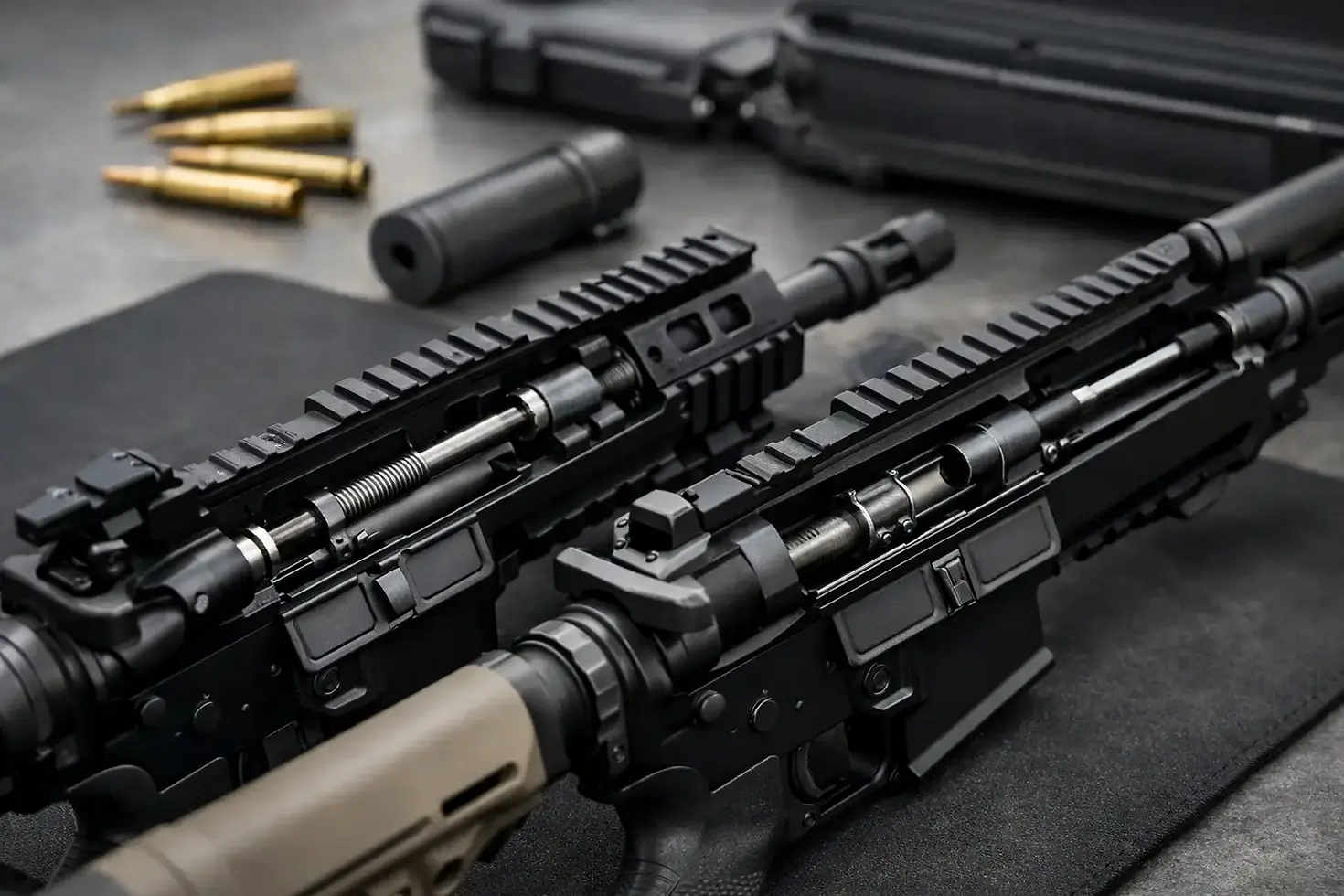
AR 15 Piston vs Direct Impingement
- retributioninfo
- May 8
- 6 min read
The difference shows up fast once the round count climbs. One rifle starts running hotter and dirtier at the bolt, the other adds parts up front and changes the way the gun balances. That is the real debate behind ar 15 piston vs direct impingement - not internet tribalism, but how each system performs when heat, fouling, suppressors, and hard use enter the mission.
For serious shooters, this is not a cosmetic choice. It affects maintenance intervals, recoil feel, parts commonality, tuning, and long-term confidence in the platform. If you are building a patrol rifle, a suppressor host, or a dependable range and training gun, the gas system matters because it changes how the rifle behaves under pressure.
AR 15 piston vs direct impingement: what actually changes
Both systems use expanding gas from the fired cartridge to cycle the action. The split happens in where that gas goes and how it moves the bolt carrier group.
A direct impingement AR routes gas from the barrel, through the gas block and gas tube, back into the carrier. That gas drives the carrier rearward and unlocks the action. It is mechanically simple, light, and proven. It is also the baseline most AR-15 parts are built around.
A piston-driven AR redirects that gas at the gas block to move a piston or operating rod. That mechanical movement then pushes the carrier to the rear. Less gas is vented into the receiver, which usually means the bolt carrier group runs cleaner and cooler. The trade-off is more moving parts near the front of the rifle and, in many designs, more proprietary components.
That single design difference drives almost every practical advantage and downside people argue over.
Reliability under real use
Direct impingement rifles have been running hard for decades. When the rifle is built correctly, gassed correctly, and fed decent ammo with quality mags, a DI gun is extremely reliable. That point gets lost because some shooters still treat direct impingement like a fragile system. It is not. A properly assembled DI rifle can eat high round counts, complete training cycles, and stay in the fight.
Where piston systems tend to gain ground is in high heat and heavy fouling conditions, especially with suppressors. Because less gas is dumped into the action, the internals usually stay cleaner over time. For shooters who run suppressed often, or who want longer maintenance windows between cleanings, that can be a real operational advantage.
Still, cleaner does not automatically mean more reliable. A piston rifle can introduce carrier tilt, wear pattern issues, and system-specific failures depending on the manufacturer. A good piston setup is a very good setup. A mediocre one can be less forgiving than a standard DI gun simply because replacement parts and tuning options are narrower.
The short version is simple. If reliability is the mission, quality matters more than ideology. A top-tier DI rifle is more trustworthy than a bargain-bin piston gun every time.
Heat, fouling, and suppressor performance
This is where piston rifles make their strongest case. On a DI gun, gas comes straight back into the carrier. That means carbon fouling and heat build up in the bolt carrier group faster. Add a suppressor and the rifle usually gets even gassier. Shooters notice more blowback, a dirtier action, and more gas to the face.
A piston system can reduce some of that mess. Heat stays more concentrated near the gas block area rather than inside the carrier, and the receiver tends to stay cleaner during long strings of fire. For a shooter running suppressed for classes, night work, or repeated drills, that matters.
But there is no free lunch here. Piston rifles can shift that heat burden forward, and they still get dirty. They are not self-cleaning rifles, and they are not immune to carbon. They just manage gas differently. If you expect a piston upper to erase maintenance entirely, you are setting yourself up for disappointment.
Weight, balance, and recoil feel
Direct impingement rifles usually win on weight and handling. The system is lean - gas tube, gas block, carrier, done. That keeps the front end lighter and the rifle more agile in transitions, positional shooting, and long training days.
Piston systems add hardware at the front of the gun. Depending on the design, that can make the rifle feel more nose-heavy. For some shooters, especially those building a compact rifle with lights, lasers, and suppressors, every ounce at the muzzle end matters.
Recoil impulse is also a factor. DI guns often feel smoother because the gas pushes directly through the carrier in a more linear way. Piston rifles can feel a little sharper or more abrupt depending on system tuning and carrier design. That does not make them uncontrollable. It just means the recoil character is different, and many experienced shooters still prefer the softer feel of a well-tuned DI setup.
Maintenance and parts support
If you like common parts, easy replacement, and broad aftermarket support, direct impingement owns that lane. Bolts, carriers, gas tubes, small parts, and troubleshooting knowledge are everywhere. That matters when you want a rifle you can service without chasing specialty components.
Piston systems are more brand-dependent. Some are excellent and backed by reputable manufacturers with proven support. Others rely on design-specific rods, springs, or carrier geometry that are harder to source. If your rifle is going to be a true hard-use setup, parts availability is not a side issue - it is part of readiness.
Maintenance itself is often easier on a piston gun at the bolt carrier level because the carrier stays cleaner. On the other hand, the piston assembly adds its own maintenance points. You are not removing work, just relocating some of it.
For most owners, DI maintenance is straightforward. Keep it lubricated, replace wear items on schedule, and stop obsessing over spotless internals. A wet DI gun generally runs better than a dry, over-cleaned one.
Cost and value
Piston rifles and piston conversion systems usually cost more. Sometimes that extra cost is justified by build quality, suppressor tuning, or a specific mission profile. Sometimes it is just paying a premium for a system that sounds more advanced on paper.
Direct impingement gives most shooters more value per dollar. The market is bigger, competition is stronger, and the platform is simpler. That means your budget can often go toward better optics, ammunition, training, magazines, and support gear instead of being consumed by the operating system alone.
That matters because capability is built across the whole rifle package. A shooter with a reliable DI carbine, quality glass, and serious trigger time is in a better position than someone who spent the whole budget chasing a piston label.
Which system fits your mission?
If your rifle is a general-purpose AR, home-defense carbine, training gun, or patrol-style setup, direct impingement is usually the smart play. It is lighter, simpler, cheaper to support, and easier to configure with standard parts. For the majority of shooters, it delivers exactly what the platform is supposed to deliver.
If you run suppressed often, expect long strings of fire, or want a cleaner-running setup with reduced gas in the receiver, a piston system becomes more compelling. It can also make sense for shooters who simply prefer the maintenance profile and are willing to accept more front-end weight and more proprietary design elements.
There is also the issue of tuning. A well-built DI rifle with the right buffer, spring, and gas setup can perform exceptionally well, including with suppressors. Likewise, a high-quality piston gun from a reputable source can be brutally dependable in harsh conditions. The answer is not that one system always dominates. The answer is that your use case decides the winner.
The bottom line on AR 15 piston vs direct impingement
The loudest opinions usually come from people defending a purchase, not evaluating a mission. In the real world, direct impingement remains the standard because it works, parts are everywhere, and the rifle stays lighter and smoother. Piston systems earn their place when heat management, suppressor use, and cleaner operation under hard firing schedules matter enough to justify the added complexity.
For most shooters, DI is the better all-around choice. For certain suppressed or high-volume roles, piston can be the right tool. The smart move is to build around how the rifle will actually be deployed, then invest the rest of your budget where performance really gets won - quality components, dependable support gear, and time behind the trigger. Retribution Tactical is built for exactly that kind of mission-first mindset.
Pick the system that supports your loadout, maintain it like your rifle matters, and let performance settle the argument.


Comments