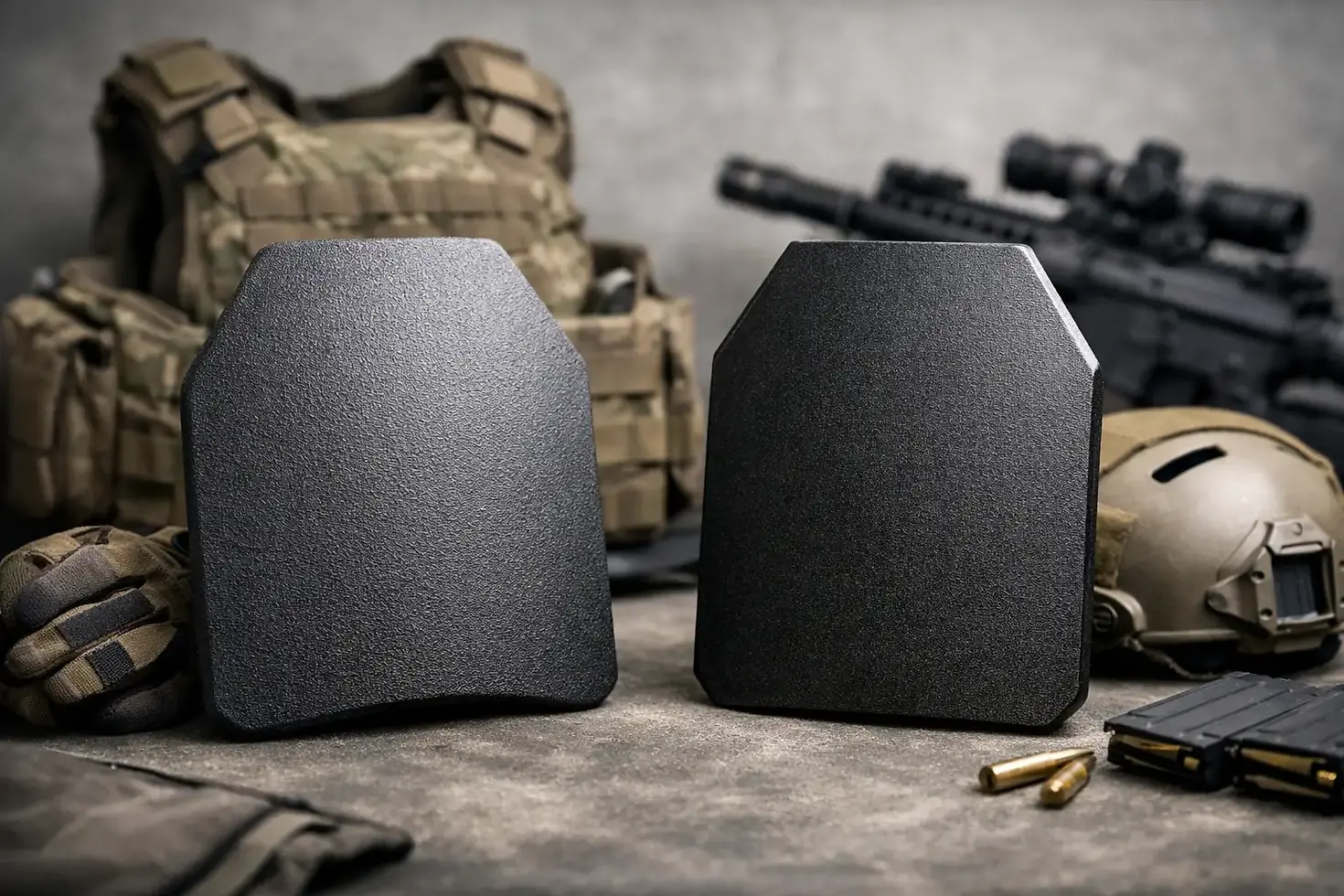
Ceramic vs Steel Plates: Which Fits Your Loadout?
- retributioninfo
- May 4
- 6 min read
If you're weighing ceramic vs steel plates, you're already past the beginner stage. This is not a cosmetic gear choice. Your plate selection affects mobility, fatigue, vehicle work, training volume, and what happens when a round actually hits your armor.
A lot of buyers come in with one simple question - which one is better? The hard answer is that better depends on your mission. Home defense and preparedness are not the same as flat-range reps, and neither looks much like professional field use. If your armor setup is supposed to be mission ready, you need to think in terms of threat profile, weight budget, and realistic use, not internet myths.
Ceramic vs Steel Plates: The Real Difference
At the broad level, ceramic plates are built to defeat ballistic threats by breaking up and absorbing the projectile. Steel plates stop rounds with a hard metal surface that resists penetration. That sounds simple, but the performance gap between them gets serious once you look at weight, spall, multi-hit behavior, and day-to-day wear.
Ceramic plates are generally favored in modern armor setups because they offer stronger ballistic performance at a lower weight for many threat levels. That matters when you're moving hard, running a carbine course, working around cover, or carrying a full fighting load. Less weight on your torso usually means more speed, less fatigue, and better endurance.
Steel plates built their reputation on durability and price. They can take rough handling, they often cost less up front, and they appeal to buyers who want something that feels indestructible. But armor is not a truck bumper. The job is not just to stop penetration. The job is to stop threats while preserving mobility and reducing secondary injury risk.
Weight Changes Everything
Most serious armor discussions eventually come back to weight because weight punishes every bad decision. Add a heavier plate, then add mags, med gear, water, comms, and whatever else rides on your carrier, and the total load climbs fast.
Ceramic plates usually win here. A quality ceramic setup can significantly reduce carried weight compared to steel. That translates into faster movement, easier transitions, and less strain during extended wear. If you're standing post, training for hours, or planning for real-world movement under stress, that edge is operationally significant.
Steel plates are commonly heavier, and that extra weight is not theoretical. You feel it in your shoulders, lower back, and lungs. The first few minutes may seem manageable. After an hour, after repeated kneeling and standing, after a rifle class in summer heat, the cost becomes obvious.
For vehicle-based use, weight matters even more. Getting in and out, rotating in tight spaces, and maintaining speed with a heavier rig gets old fast. If your setup has to stay agile, ceramic earns its place quickly.
Ballistic Performance Is Not Just About Stopping a Round
This is where ceramic vs steel plates stops being a price conversation and becomes a survivability conversation. Both can stop certain threats, but they do it differently, and those differences matter.
Ceramic armor is widely preferred for rifle threats because it is designed to disrupt and capture energy more effectively. Many ceramic plates are engineered for common rifle rounds and are available in configurations that address higher threat levels. For buyers building a serious defensive or duty-capable setup, that performance profile is hard to ignore.
Steel can stop some rounds, but it introduces a major concern - spall and fragmentation. When a projectile impacts steel, fragments can deflect outward. Even with anti-spall coatings, that risk is not fully erased. Those fragments can travel up into the neck, arms, chin, or lower body depending on angle and carrier setup. A plate that stops penetration but sends metal fragments into vulnerable areas is not a clean win.
That issue is one reason many experienced buyers avoid steel for defensive use. Range targets and armor plates are not the same problem. What works for one does not automatically belong in the other role.
Durability Has More Than One Meaning
Steel supporters often lead with durability, and to be fair, they have a point. Steel plates handle rough physical abuse well. Drops, knocks, and general hard use are less likely to create concern. They feel bombproof, and for some users that inspires confidence.
Ceramic requires more disciplined handling. It is durable enough for intended use, but it is not immune to damage from abuse, neglect, or repeated impacts outside normal wear. That does not mean ceramic is fragile in the cartoon sense some people claim. It means you treat it like critical life-saving gear, not scrap metal.
There is another kind of durability that gets less attention - bodily durability. Carrying excess weight for long periods beats up the user. On that front, lighter ceramic plates often do more to preserve operational capability than heavier steel. Gear durability matters, but so does the body's ability to fight, move, and think under load.
Training Use vs Defensive Use
This is where the answer often splits.
If someone wants plates for occasional workouts, range movement, or low-cost carrier familiarization, steel can still show up in the conversation. Some buyers use it as a training-only option because it is cheaper and resistant to abuse. If the plate is never intended for actual threat response, they may accept the trade-offs.
But that line has to stay clear. Training gear has one mission. Defensive armor has another. Once you're talking about home defense, civil unrest, preparedness, or professional use, steel becomes much harder to justify. The downsides are too real, especially the weight and fragmentation risk.
Ceramic is the stronger choice for buyers who want one armor setup that can actually deploy for real-world problems. It better matches the expectations of a modern, operational loadout. If your plate carrier exists for more than gym reps and costume value, ceramic should be the baseline standard you measure from.
Cost Matters, But Cheap Armor Gets Expensive Fast
Steel usually pulls buyers in with price. On paper, it looks like an easy way to get armored sooner. That budget advantage is real, especially for new buyers trying to assemble a full carrier setup without torching their wallet.
But lower entry cost does not always mean better value. If the heavier plate reduces mobility, increases fatigue, and forces you to replace the setup later, the cheap option stops looking so efficient. Add trauma pads, anti-spall coatings, and the compromises needed to make steel more tolerable, and the gap can narrow.
Ceramic costs more because the performance is different. You're paying for advanced ballistic design, lower weight, and a more duty-capable solution. For serious shooters and preparedness-minded buyers, that premium often makes sense. The mission does not care which option looked cheaper in the cart.
Fit, Carrier Setup, and Threat Profile
Armor decisions should never happen in a vacuum. Your body size, carrier cut, expected threat level, and use case all shape the right answer.
A lighter ceramic plate may let you run a more capable loadout without overburdening your carrier. That matters if you're also carrying rifle mags, medical gear, and sustainment equipment. A heavier steel plate can force compromises everywhere else.
Threat profile matters too. If you are planning around rifle threats, ceramic is usually the better-aligned choice. If your concern is a low-cost training stand-in with no expectation of real defensive use, steel may still have a place. The key is honesty. Build for the mission you are likely to face, not the one that makes a purchase easier.
For most serious setups, that points toward ceramic. It is the dominant choice for a reason. Better mobility, stronger defensive relevance, and fewer concerns about fragmentation make it the plate type more consistent with modern tactical use.
Which One Should You Choose?
For a real protective loadout, ceramic is usually the right call. It supports movement, reduces fatigue, and aligns better with current ballistic expectations. If your armor might ever be called into action instead of just hanging in the gear room, ceramic is the smarter investment.
Steel still shows up for narrow use cases, mostly where budget and abuse resistance outweigh all other factors. That can make sense for some training roles, but it is a limited lane, not a universal answer.
At Retribution Tactical, the better question is not what is cheapest or toughest on a workbench. It is what helps you stay mobile, protected, and operational when the pressure is real. Choose the plate that fits your mission now, not the one you'll have to replace when the stakes go live.



Comments