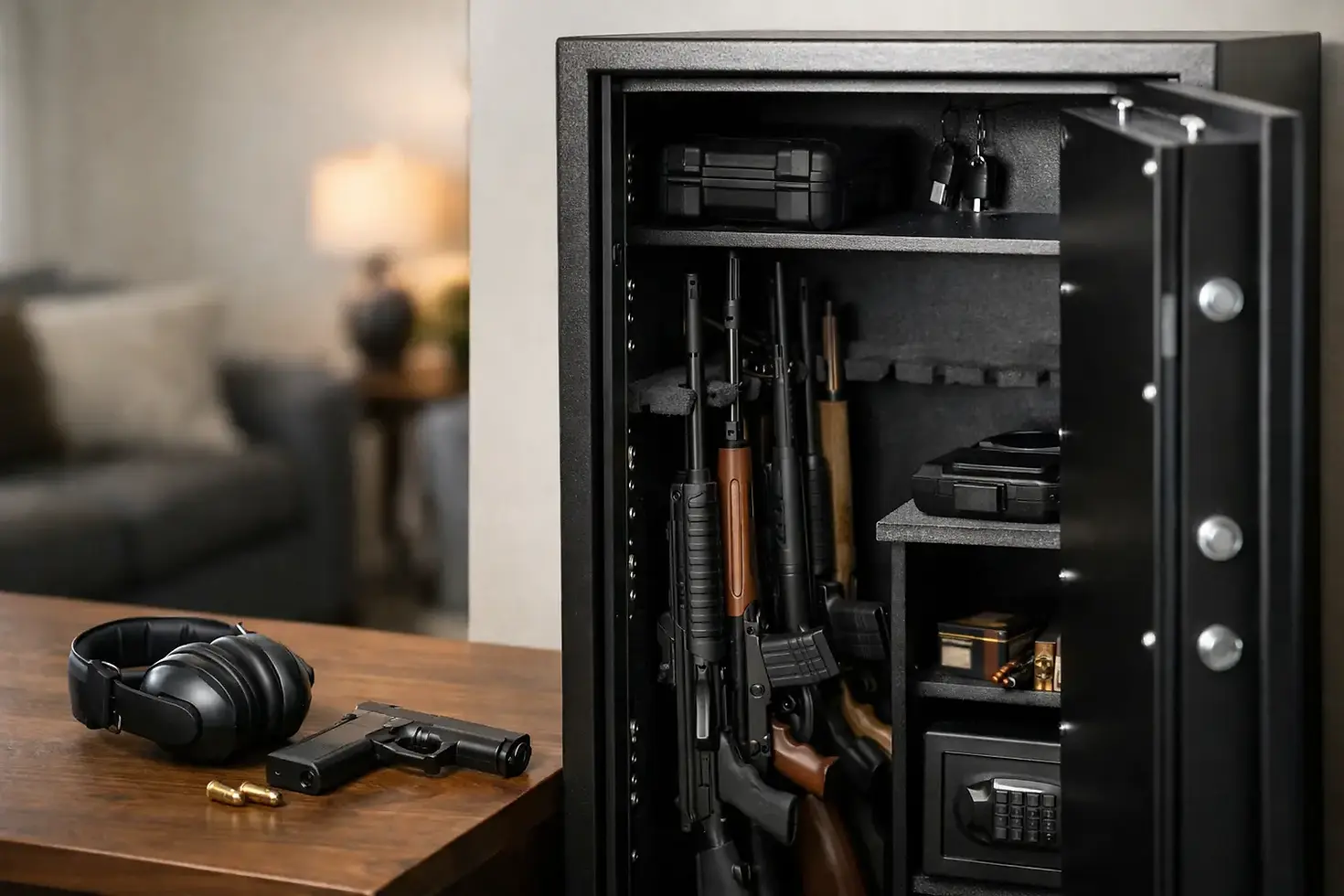
How to Store Firearms Safely at Home
A rifle leaning in the closet and a pistol tucked in a nightstand is not a storage plan. It is a liability. If you are serious about readiness, protecting your gear, and controlling access inside your home, you need a system that works under pressure and holds the line when conditions are less than ideal. That is the real answer to how to store firearms safely - not just out of sight, but secured, organized, protected from damage, and accessible only to the right person at the right time.
Safe firearm storage is a balance of security, speed, environment, and discipline. Lean too far toward convenience and you create risk. Lean too far toward delay and you may lock yourself out of your own defensive plan when seconds matter. The right setup depends on your mission profile, your household, and how your firearms are actually used.
How to store firearms safely starts with access control
The first priority is simple: unauthorized hands do not touch your firearms. That means children, guests, contractors, curious relatives, and criminals all get stopped at the same point - locked storage.
For most gun owners, that means a dedicated gun safe, cabinet, or lockbox. The right choice depends on what you own. A full-size long-gun safe makes sense for AR platforms, scoped rifles, shotguns, and a growing collection. A quick-access handgun safe fits a defensive pistol in a bedroom, office, or other controlled location. A steel locking cabinet can work for lower-risk storage, but it is not the same as a true safe when forced entry is part of the threat model.
If you keep firearms for defensive use, your storage plan has to account for fast access without sacrificing security. That usually points toward a quick-access safe with a reliable keypad, biometric reader, or mechanical push-button lock. Biometric options can be fast, but quality matters. Cheap units fail when fingers are wet, dirty, or poorly positioned. Mechanical or keypad systems are often more dependable over time if you train with them.
The point is not just to own a safe. The point is to deploy storage that matches the role of the firearm.
Match the storage platform to the firearm
Not every firearm should be stored the same way. A home-defense handgun, a range rifle, and a collector piece each demand a different approach.
A bedside pistol needs controlled, rapid access. That does not mean under the pillow or in a drawer. It means inside a dedicated lockbox bolted down if possible, positioned where you can reach it consistently, and tested in low light. A defensive shotgun or AR may belong in a full-length quick-access safe designed for long guns, especially if you need to secure optics, lights, slings, and loaded magazines as part of the setup.
Range guns and backup firearms can prioritize stronger delay against theft over immediate retrieval. In that case, a heavier full-size safe with solid locking bolts, reinforced door construction, and anchored installation is the stronger move. If you own multiple firearms, interior organization matters more than most people think. Crowding rifles together damages finishes, stresses optics, and turns retrieval into chaos. A good storage layout keeps each platform protected and easy to identify.
That is where serious owners separate themselves from casual buyers. Storage is not just about putting guns away. It is about maintaining an operational loadout without creating confusion or unnecessary wear.
Handguns, rifles, and staged defensive guns
Handguns benefit from compact, quick-access units in specific zones of the home, but only when those zones are controlled. Rifles and shotguns need more vertical space, more care around mounted accessories, and enough clearance to avoid banging turrets, red dots, or weapon lights. If a firearm is staged for defense, every part of the storage workflow should be repeatable in the dark, under stress, and without guesswork.
Keep ammunition secure and separate when appropriate
A major part of how to store firearms safely is deciding how ammunition fits into the plan. In many households, storing ammunition separately adds a layer of control that makes sense. In others, especially where a defensive firearm is staged for lawful emergency use, separating loaded mags from the firearm may slow access more than it improves safety.
This is where context matters. If you have kids in the home, frequent visitors, or shared spaces, a separated system often provides stronger control. If you live alone and maintain a dedicated defensive setup, a loaded magazine secured in the same quick-access safe may be the more realistic choice. What should never happen is loose ammunition scattered across drawers, shelves, or range bags with no accountability.
Ammo should stay dry, labeled, and contained. Military-style cans, sealed containers, and dedicated shelves inside or near the safe keep calibers organized and reduce clutter. You want immediate identification, not a pile of mixed boxes and loose rounds when it is time to load out for the range or rotate defensive ammo.
Control moisture, dust, and long-term wear
The threat is not only theft or unauthorized access. It is also corrosion, neglect, and environmental damage. A quality firearm can still suffer if it sits in a humid garage, a damp basement, or an unprotected case for months.
If you are storing firearms in a safe, moisture control is mandatory. Desiccant packs help, but for larger safes, a powered dehumidifier rod or similar internal humidity solution gives more consistent protection. This matters even more if your rifles wear premium optics, backup iron sights, slings, and metal accessories that can all suffer from long-term exposure.
Soft cases are useful for transport, not long-term storage. Foam-lined hard cases can also trap moisture if a firearm goes in dirty or damp after a field day or range session. Before storage, wipe the gun down, inspect metal surfaces, confirm the bore condition, and apply the appropriate protectant. Dust is not the enemy by itself. Neglect is.
Why the room matters
Where you place the safe matters almost as much as the safe itself. A climate-controlled interior room beats an uninsulated shed or garage in most cases. Basement storage can work, but only if moisture is managed aggressively. Heat swings, humidity, and poor airflow shorten gear life. Secure storage should protect both the firearm and the investment you made in every mounted component.
Prevent theft with smart placement and anchoring
A safe that can be tipped over, dragged out, or pried into without resistance is not giving you full coverage. Weight helps, but anchoring is what turns a storage container into a serious theft barrier.
Whenever possible, bolt the safe to a solid foundation or structural support. Keep it out of obvious sight lines from doors and windows. Do not advertise it to every guest who walks through your house. Hidden placement is not a substitute for steel and locks, but it adds another layer to your security posture.
This is also where cheap cabinets start to show their limits. They may stop casual handling, but they are not built for determined forced entry. If your collection includes high-value rifles, optics, NFA items where applicable, or multiple sidearms, stronger construction is worth the investment. The cost of replacing stolen gear far exceeds the cost of better storage.
Build a storage routine, not just a storage spot
The strongest gear still fails if your habits are sloppy. Safe storage is procedural. Every firearm should return to the same place, under the same condition, with the same checks completed. That means verifying status, storing magazines where they belong, securing accessories, and locking the unit every time.
This is especially critical after range days, cleaning sessions, and dry-fire practice. Many negligent storage mistakes happen when the routine breaks. A gun gets set down "for a minute" and stays there. A case gets left half-zipped in the office. A safe door stays unlocked because you planned to come right back. That is how avoidable incidents happen.
A clean routine also helps with accountability. You know what is in the safe, where it is, what condition it is in, and what support gear is staged with it. For preparedness-minded owners, that level of control is not overkill. It is baseline discipline.
Households change, so your storage plan should too
A single adult living alone can run a different storage setup than a family with children, teenagers, frequent visitors, or in-home staff. A move to a new house, a new baby, a renovation, or a growing collection should all trigger a fresh look at your setup.
What worked when you owned one pistol may not work when you own defensive handguns, an AR, a hunting rifle, and stacks of loaded magazines. At that point, layered storage starts making more sense. A full-size safe for the core collection. A fast-access handgun safe for immediate defense. Controlled ammo storage. Environmental protection. Repeatable placement.
That layered approach is where a serious tactical retailer like Retribution Tactical fits naturally into the equation. Secure storage is not separate from the rest of your loadout. It is part of the mission. Your optics, armor, mags, rifles, and support gear only stay mission ready if they are secured with the same level of discipline you bring to the range.
The best storage setup is the one you will use every single time without shortcuts. If it protects your firearms, controls access, preserves your equipment, and supports your real-world readiness plan, you are on solid ground. Build that system now, before a bad moment exposes the gaps.


Comments