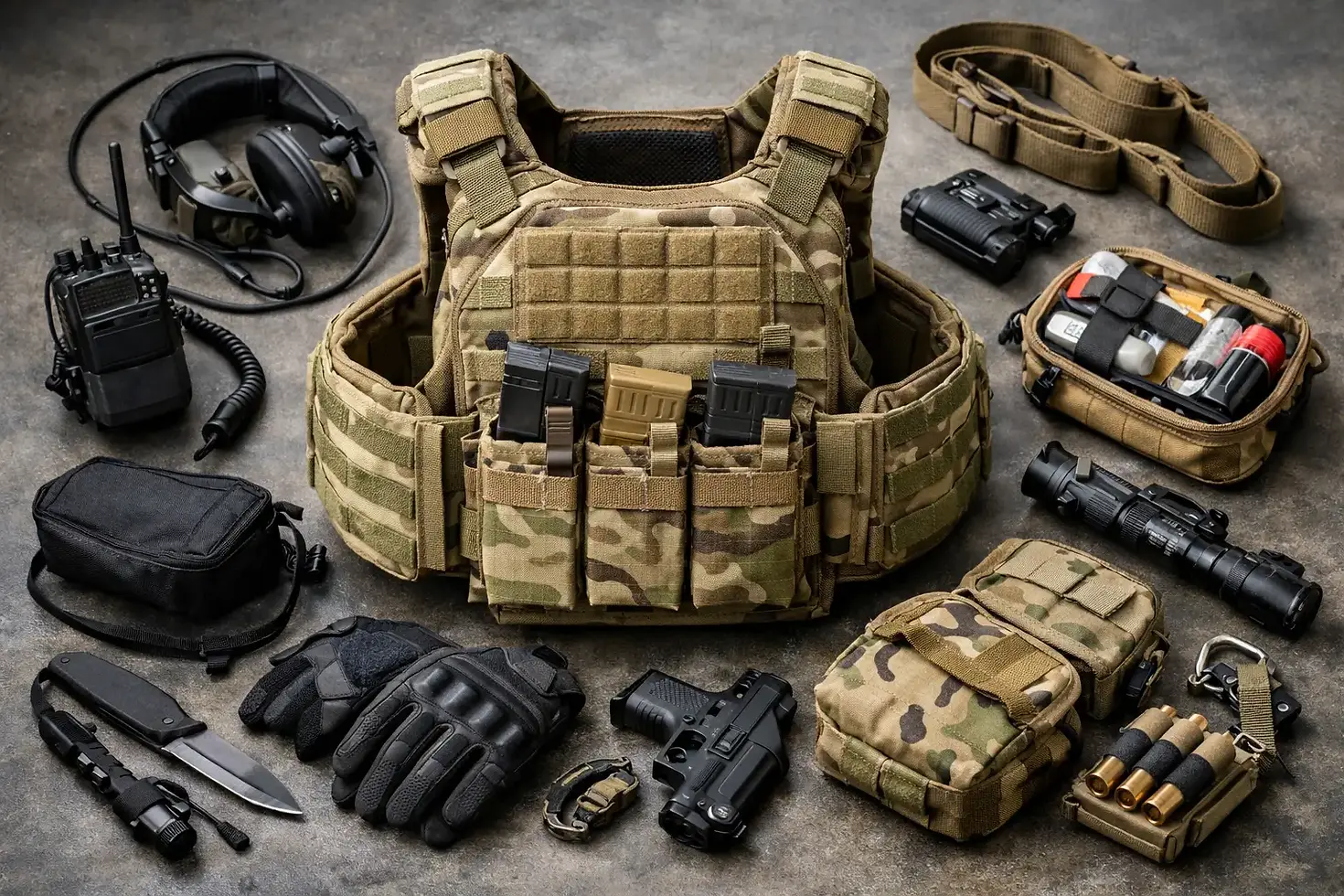
Plate Carrier Accessories List for Real Loadouts
A plate carrier is not a costume rack. Every pouch, tool, and attachment adds weight, takes up real estate, and can either support your mission or get in the way when the clock is running. This plate carrier accessories list is built for shooters, prepared citizens, and field-minded users who want a disciplined loadout - not a carrier covered in gear with no job to do.
Start with the carrier, the armor, and the mission. A range setup does not need the same equipment as a duty-oriented rig, a vehicle kit, or an emergency medical loadout. Build around the tasks you actually train for, then keep the carrier balanced, accessible, and repeatable.
Plate Carrier Accessories List: Start With the Essentials
The first accessories should solve the core problems of ammunition carriage, medical response, communications, hydration, and identification. Everything beyond that needs to earn its place.
Magazine Placard or Rifle Magazine Pouches
A rifle magazine placard is usually the center of the front plate. For most AR-15 users, a three-magazine placard delivers a practical baseline without turning the carrier into a heavy, front-loaded burden. Choose inserts or retention that hold magazines securely during movement but still allow a clean, deliberate draw.
Open-top elastic retention is fast and low profile. Kydex-style inserts offer more consistent retention and easier reindexing. Flap-covered pouches better protect magazines from mud and debris, but they are slower to access. There is no universal winner. The right choice depends on whether your priority is range speed, field protection, or a balance of both.
If you need more ammunition, do not automatically stack more magazines on the front. Consider a belt, chest rig, pack, or vehicle-based resupply. A carrier should let you move, shoulder a rifle, get prone, and work around obstacles.
Medical Kit and Tourniquet Mount
Medical capability belongs on serious gear, but it must be placed where you can reach it with either hand. A compact individual first-aid kit mounted low on the rear of the carrier is a common solution. It keeps the front clear while making essential trauma supplies available to you or a teammate.
A dedicated tourniquet holder can mount on the cummerbund, front panel, or belt line. Keep it exposed enough for rapid access, protected from unnecessary UV and abrasion, and secured so it will not fall out during movement. Train with the exact location you choose. Equipment is only useful if you can find it under stress.
Stock medical gear according to your training level and local requirements. At minimum, know how to use the tools you carry. A full pouch of unopened equipment does not create medical capability.
Radio Pouch and Communications Hardware
A radio pouch is worth adding when you train or operate with a team, work on large property, participate in organized events, or need reliable communications during an emergency. Select a pouch that fits your specific radio body, battery configuration, and antenna length. A loose universal pouch can become a problem when crawling, running, or working around vehicles.
Mount the radio where you can manipulate controls without interfering with your rifle stock or drawstroke. For many users, the weak-side cummerbund is the most practical location. Route cables cleanly and avoid snag hazards around the shoulder straps. If you use a push-to-talk switch, test it while wearing gloves and while shouldering your rifle.
Hydration Carrier or Rear Water Panel
Water is a mission-critical accessory, especially in heat, extended training, or outdoor field use. A low-profile hydration bladder mounted to the back panel keeps water close to the body and preserves your hands. A one- to two-liter bladder is often enough for shorter sessions, while longer field days may call for a separate pack and planned resupply.
The trade-off is bulk. A rear hydration panel can interfere with vehicle seats, pack straps, and certain back-mounted medical kits. If your carrier spends most of its time in a vehicle or at an indoor range, water may be better carried elsewhere.
Administrative Pouch
A small administrative pouch can hold a notebook, map, batteries, chem lights, a marker, spare earplugs, ID, or other compact mission items. Keep it slim. Thick admin pouches on the upper chest can interfere with your rifle stock, block your view downward, and create discomfort when prone.
Use this space for items that support decision-making and equipment sustainment, not random gear accumulation. If an item has no clear purpose, it does not belong on the carrier.
Add Accessories Based on Your Mission
Once the essentials are squared away, add capability with restraint. The best plate carrier setup is not the one with the most MOLLE covered. It is the one that remains stable and usable through the work it is built to handle.
Utility and General-Purpose Pouches
A general-purpose pouch is useful for gloves, navigation tools, spare batteries, a compact headlamp, field notes, or small maintenance items. It can also carry an energy bar or other short-duration sustainment supplies during a long training day.
Avoid loading large utility pouches with heavy, loose objects. Weight shifts during movement and creates unnecessary noise. If you need to carry substantial sustainment equipment, move it to a pack or assault panel rather than turning the carrier into a rucksack.
Side Plate Pouches and Cummerbund Accessories
Side armor capability can be appropriate for professional requirements or specialized protective roles, but it comes with real costs in weight, heat retention, and mobility. If side plates are part of your armor plan, use dedicated pouches that keep them stable and correctly positioned.
The cummerbund can also carry radios, tourniquets, pistol magazines, compact utility gear, or soft armor inserts. Keep both sides balanced. A heavily loaded support side with nothing on the opposite side can make the carrier shift and feel worse over time.
Identification, Signal, and Low-Light Tools
A removable identification patch, subdued flag, or agency-specific marker may be required for lawful professional use, team organization, or training events. Use identifiers responsibly and do not misrepresent affiliation or authority.
For low-light work, a compact white-light headlamp, chemlight holder, or strobe may have value depending on the environment. These tools should be selected around a clear plan. A strobe with no identification protocol or a pouch full of chemlights with no intended use is clutter, not readiness.
Cable Management and Retention Hardware
Cable routing clips, hook-and-loop retainers, elastic keepers, and shock cord are small accessories that make a major difference. Loose radio cables and hydration tubes snag on door handles, brush, sling hardware, and other equipment. Secure them tightly enough to stay put, but leave enough slack for head movement and normal shouldering of the rifle.
Retention also matters for mission-critical tools. Dummy cord or secure lanyard systems may make sense for radios, navigation devices, or tools used around water, vehicles, or elevated positions. Do not lanyard everything. Too much cord creates its own snag and entanglement problems.
Build Around Armor, Fit, and Mobility
Accessories cannot fix a poor-fitting carrier. Before adding pouches, confirm that your ballistic plates are sized for your torso and positioned correctly. The carrier should cover vital anatomy without riding excessively low or restricting your ability to mount a rifle. Armor is protective equipment, not a guarantee of safety, and it should be used according to its rating, manufacturer instructions, and applicable laws.
Then check the loadout in real positions. Shoulder your rifle from both sides. Go prone. Kneel. Sit in a vehicle. Climb stairs. Work around a barricade. If a pouch blocks movement or equipment access, relocate it before buying more gear.
Weight discipline matters just as much. A carrier that feels manageable for five minutes can become a liability after an hour in heat. Prioritize water, medical capability, ammunition, and communications before comfort items. Even then, take only what the mission demands.
Run a Setup You Can Actually Train With
A plate carrier becomes operational through repetition. Practice magazine changes, medical access, radio use, hydration, and movement with the gear mounted exactly where it will stay. Make adjustments one at a time so you know what improved the setup and what created a new problem.
Retribution Tactical is built around this standard: mission-ready equipment should be selected for hard use, not shelf appeal. Choose durable pouches, proven retention systems, and accessories that support your armor and rifle platform without compromising mobility.
Your carrier does not need every available attachment. It needs the right equipment, placed with purpose, and enough training behind it that every movement is deliberate when it counts.


Comments