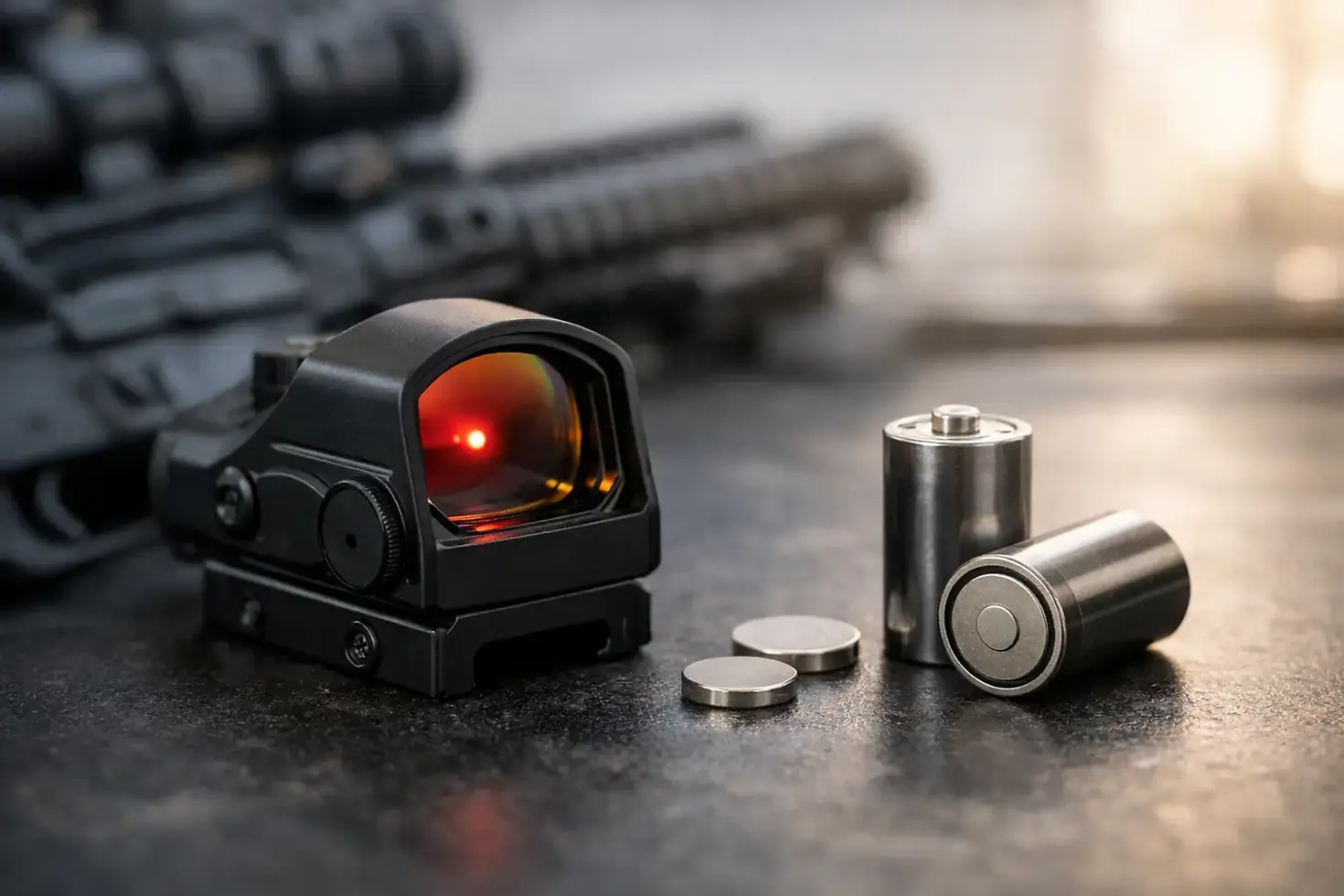
Red Dot Battery Life: What Really Matters
A dead optic always shows up at the wrong time. Not on the bench, not during a casual gear check - but when the rifle is cased for a class, staged for a hunt, or sitting ready for home defense. That is why red dot battery life matters far beyond a spec sheet. For serious shooters, runtime is not a marketing extra. It is part of the optic’s operational value.
The hard truth is simple: battery life claims can be useful, but they rarely tell the whole story. A red dot advertised for 20,000, 50,000, or even 100,000 hours may perform exactly as stated under controlled conditions. Your real-world use is another story. Brightness settings, reticle design, temperature, battery quality, and whether the optic uses shake-awake or constant-on architecture all change the equation.
Red dot battery life is more than a number
Manufacturers usually publish battery runtime at a mid-level brightness setting, often in ideal indoor conditions. That gives you a baseline, not a guarantee. If you run the optic brighter to fight daylight washout or target splash on a white berm, expected runtime drops. If the optic sits in a patrol vehicle through seasonal temperature swings, battery performance can shift again.
This matters because different roles demand different standards. A range rifle can tolerate more battery management. A defensive carbine or duty setup should have much less room for error. In that context, long red dot battery life is not just convenient - it supports readiness.
Emitter efficiency plays a major role here. Some optics are engineered to stretch power draw so well that you can leave them on for years at a usable setting. Others trade some of that efficiency for added features, larger windows, multiple reticles, or higher peak brightness. None of that is automatically bad. It just means runtime should be judged against mission profile, not hype.
What affects red dot battery life in the field
Brightness is the biggest variable, and it is the one most shooters control every time they deploy the optic. Crank the dot high enough for bright noon sun, and battery drain rises fast. Dial it down for indoor use or low light, and runtime improves. The catch is that many people leave the optic brighter than necessary because they want instant visibility under any condition. That is understandable, but it is also why real battery life often falls short of the headline number.
Reticle type also matters. A simple 2 MOA dot generally uses less power than a more complex circle-dot system, especially if both are run at comparable visual intensity. Bigger windows and enhanced emitter systems can influence power demand too, depending on the design.
Battery type is another piece of the puzzle. CR2032 and CR1632 cells are common, but they do not offer identical capacity. Even within the same size, premium batteries usually deliver more consistent output and shelf stability than bargain-bin cells. If you are trusting an optic on a serious rifle, battery quality is not the place to cut corners.
Temperature gets overlooked until it causes a problem. Cold weather can reduce battery efficiency, sometimes enough to expose weak cells or marginal runtime. Heat can also shorten battery life over time, especially if gear lives in a truck, safe room, or range bag that sees extreme summer temps. For operational use, environmental exposure should be part of your battery replacement plan.
Then there is electronics architecture. Some red dots are built around always-on readiness. Others use motion activation, auto-off timers, or solar assist. These features can dramatically improve practical runtime, but they are not equal in every optic. Shake-awake is useful, but only if wake response is immediate and dependable. Solar backup is useful, but only when ambient light conditions actually support it.
Constant-on vs shake-awake
This is where buyer priorities need to stay disciplined. Constant-on optics are simple and predictable. If the battery is fresh and the optic is functioning, the dot is there. That simplicity is a major reason many shooters still prefer it for defensive and duty-oriented setups.
Shake-awake systems reduce unnecessary drain and can extend service intervals. For a range rifle, truck gun, or general-purpose build, that can be a strong advantage. The trade-off is that you are adding another layer of electronics and programming into the system. Most modern units handle this well, but the standard should still be reliability first.
If your use case is high consequence, simplicity often wins. If your use case is mixed and you want strong battery preservation without constant manual shutdown, a proven shake-awake optic can make a lot of sense. It depends on how you stage the rifle, how often you inspect it, and how much redundancy you want built into the setup.
How much battery life do you actually need?
Not every rifle needs five years of advertised runtime. But every serious rifle needs a battery plan.
For a home-defense carbine or patrol-style setup, long-service red dot battery life is worth paying for because it reduces one failure point in a weapon system that may need to perform without warning. If the optic supports true constant-on use for extended periods, that is a meaningful capability.
For competition or training guns, battery life still matters, but convenience may outweigh maximum endurance. You may accept shorter runtime in exchange for a larger window, more aggressive reticle, or other performance features. That is a fair trade if you are disciplined about maintenance.
For hunting rifles, battery life matters differently. The optic may sit idle for stretches, then need to perform in cold weather and changing light. In that role, shelf stability, battery condition, and pre-season replacement are often more important than raw published hours.
Practical battery management for serious shooters
The best way to handle optic power is to treat it like preventive maintenance, not guesswork. If the rifle matters, replace the battery on a schedule instead of waiting for failure. Many shooters do this annually on birthdays, New Year’s Day, or daylight saving time changes. The exact date matters less than consistency.
Before classes, hunts, or any defensive role, confirm brightness settings in the environment you expect to face. A dot that looked fine in the garage may bloom or disappear once you step into full sun. That check also tells you whether you are running the optic harder than normal and should adjust your battery expectations accordingly.
Keep spare batteries in your range kit, but store them properly. Loose cells rolling around with tools and metal parts are asking for trouble. Use a battery caddy or dedicated compartment. Better yet, stage extras where they support the optic that needs them.
If your optic has a side-load battery tray, replacement is easier and often preserves zero. Top-load systems can be convenient as well. Bottom-load designs are not a deal breaker, but they are less friendly to quick maintenance because they may require removing the optic. That design choice should factor into your buying decision if uptime matters.
When battery life should influence your optic purchase
Battery runtime should never be the only spec you buy on. Glass quality, emitter clarity, housing durability, mounting interface, waterproofing, and track record still carry serious weight. A red dot with legendary battery life but weak durability is not mission ready. Neither is an optic with premium glass and poor power management if the rifle is meant for defensive use.
The smarter move is to evaluate battery life as part of the total operating package. Ask whether the optic’s runtime aligns with how the rifle will actually be used. Ask whether the controls let you manage brightness efficiently. Ask whether battery changes are simple enough that you will actually stay on schedule.
That is the difference between buying for the spec chart and buying for field performance.
For shooters building dependable carbines, red dot battery life is not about chasing the biggest number on the box. It is about confidence. Confidence that the dot will be there when the rifle comes up. Confidence that your maintenance cycle is realistic. Confidence that the optic matches the mission instead of forcing compromises you did not plan for.
If you are outfitting a rifle for serious use, think like an operator, not a casual browser. Choose the optic that fits the role, feed it quality batteries, and build replacement intervals into your routine. That kind of discipline keeps your gear ready long after the marketing language fades.


Comments