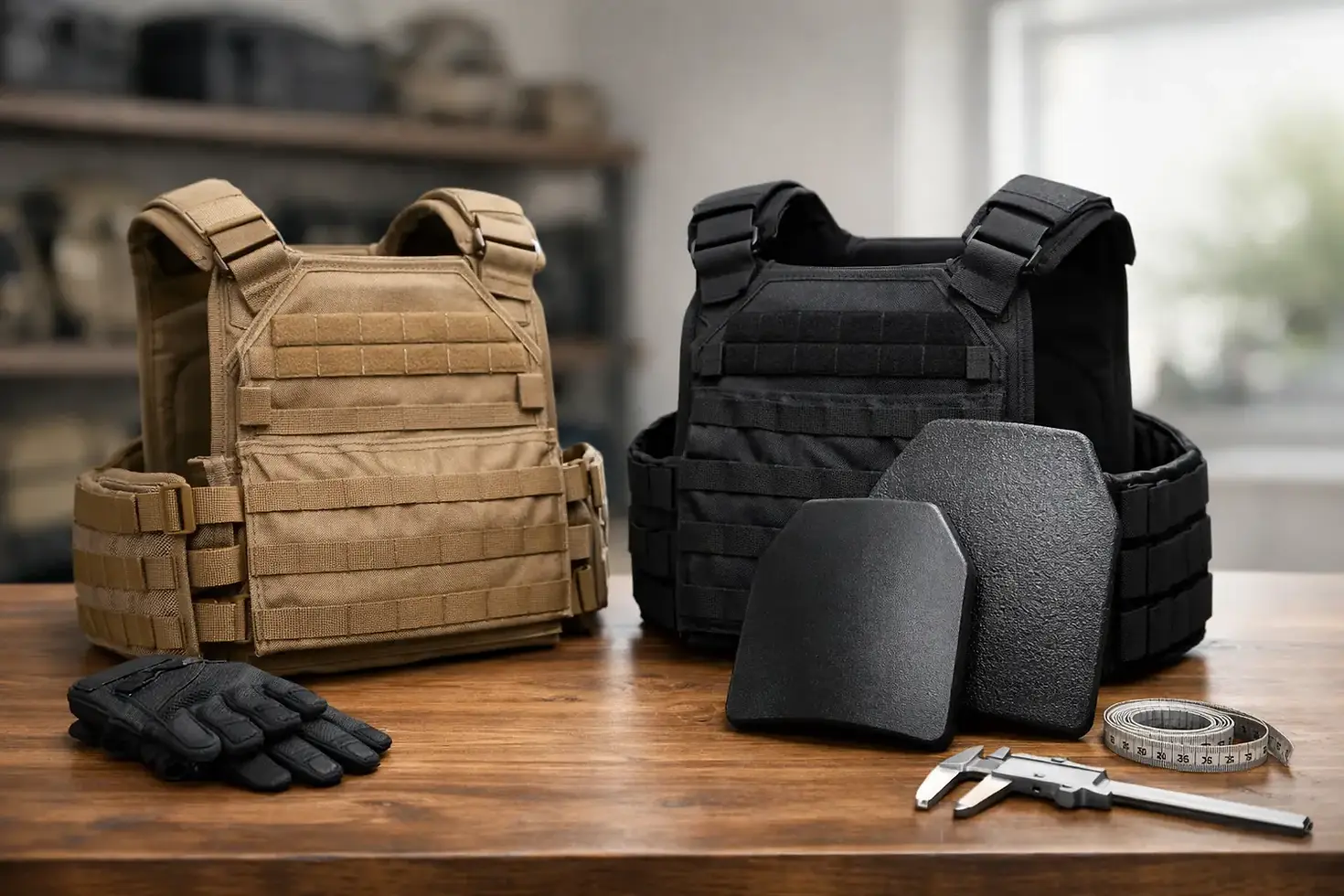
Plate Carrier Sizing Guide That Fits Right
A bad fit shows up fast. The carrier rides too low, the plates shift when you move, your shoulder weld gets sloppy, and every reload feels like a fight against your own gear. A proper plate carrier sizing guide is not about comfort alone - it is about coverage, mobility, and keeping your loadout mission ready when the pressure is on.
The first mistake most buyers make is sizing the carrier to their T-shirt. That is backwards. You size the armor plate to your body first, then choose the carrier built to hold that plate. Plate carriers are armor platforms, not fashion pieces. If the plate size is wrong, the carrier size will be wrong, no matter how adjustable the cummerbund or shoulder straps look on paper.
Plate carrier sizing guide: start with the plate
Your ballistic plate should protect your vital zone, not your entire torso. The target area is the space covering your heart, lungs, and major vessels. Too small, and you leave critical real estate exposed. Too large, and you lose speed, range of motion, and the ability to shoulder a rifle cleanly.
A simple field check works well. Measure from the suprasternal notch - the soft notch at the top center of your chest - down to about 2 to 3 inches above your navel when standing naturally. Then measure nipple to nipple for width, or more accurately, the width between the inside lines of your shoulders where the plate can sit without interfering with arm movement. That measurement gives you a practical plate envelope.
For many shooters, a 10x12 plate gets close enough to work. But close enough is not always the standard. Body shape matters. A broad chest, narrow torso, shorter frame, or long upper body can push you toward a different cut or size. Swimmer cut, shooter cut, and SAPI sizing each change how the plate interfaces with your shoulders and rifle presentation.
Standard plate sizes and what they really mean
The most common commercial size is 10x12. It is popular for a reason - it fits a wide range of average builds and is widely supported across carrier designs. But it is not a magic answer. Some users need small or medium SAPI plates for a cleaner fit. Others with larger frames may need large or extra-large SAPI to get proper width and vertical coverage.
SAPI sizing usually follows this general pattern: small, medium, large, and extra-large. Commercial plates often use 10x12 or 11x14 measurements instead. Those systems overlap, but they are not identical. A carrier built for medium SAPI may not fit every 10x12 plate perfectly, especially if the plate is thicker, more aggressively curved, or built with a different corner cut.
That is why you should treat the plate manufacturer specs as operational data, not marketing filler. Plate thickness, cut, and curvature all affect fit inside the carrier. A slick low-profile carrier may hold a thin plate perfectly but fight you on a thicker ceramic setup.
Carrier size follows plate size
Once you know your plate size, choose a carrier designed around it. This is where many buyers overthink body size and underthink armor compatibility. Most quality plate carriers are sized by the plate they hold, not by chest measurement alone.
If your armor is medium SAPI, buy a medium carrier made for medium SAPI. If your armor is 10x12 shooter cut, buy a carrier that explicitly supports 10x12 shooter cut plates. Then use the carrier adjustments - shoulder straps, cummerbund, placard ride height - to tune the fit to your body.
Chest size still matters, especially with cummerbund range. A bigger chest or heavier layering setup may require a larger cummerbund even if the front and rear plate bags stay the same size. This matters for winter use, training over outer garments, or integrating side armor and radios. The plate bag size and the wraparound adjustment are related, but they are not the same thing.
How a plate carrier should sit on the body
The top edge of the front plate should ride high, near the suprasternal notch. Not below the pecs. Not floating over the stomach. High enough to protect the upper thoracic cavity, while still allowing you to move and shoulder your rifle.
The rear plate should mirror that height as closely as possible. If the back plate hangs lower than the front, the system will feel unstable and can shift under movement. Shoulder straps should keep the carrier level, not drag the front down because the load is front-heavy.
A good fit feels secure without turning every breath into work. The carrier should stay planted during movement, kneeling, and prone transitions. If it bounces during a short sprint or flares away from your torso when you hit the ground, it is not dialed in yet.
The plate carrier sizing guide most people skip: thickness and load
Plate dimensions are only part of the sizing picture. Thickness changes everything. A thin polyethylene plate and a thick ceramic-composite plate may share the same footprint, but they will not behave the same way inside the same carrier.
Thicker plates can make a carrier feel tighter across the chest and bulkier under the arms. Add soft armor backers, side plates, mags, admin gear, and hydration, and the entire profile changes. That affects shoulder mobility, stock placement, and whether the cummerbund still closes with enough overlap to stay secure.
This is where mission matters. A slick home-defense setup can run tighter and cleaner than a sustained field loadout with radios, side armor, and medical gear. Neither is wrong. But sizing for a minimalist setup and then expecting it to carry a full operational load is how you end up with a carrier that technically fits and practically fails.
Common sizing mistakes that wreck performance
The first is buying a larger plate for more coverage. More plate does not always mean more protection if it cuts into mobility so hard that your rifle work, movement, and endurance suffer. Protection is a balance between coverage and performance.
The second is running the carrier too low because it feels more comfortable. That comfort comes at the expense of vital coverage. Plates are supposed to protect what matters most, not hang like weighted chest rigs.
The third is ignoring the cut of the plate. A square or poorly cut upper corner can interfere with shouldering a rifle, especially for shooters who run a compact, aggressive stock position. A shooter or swimmer cut can improve presentation, but there is a trade-off in edge coverage. Again, it depends on your application.
The fourth is assuming all "medium" carriers fit all medium plates. They do not. Variations in thickness, curve, and manufacturer tolerances can create a sloppy or overly tight fit.
Fit checks before you commit to a full setup
Once the carrier is on, check the basics under movement. Mount your rifle from low ready several times. Go prone. Kneel. Bend at the waist. Run a few dry reloads. If the top corners block your stock placement or the cummerbund shifts every time you move, something is off.
Pay attention to hot spots. Pressure at the traps may mean the shoulders are carrying too much weight because the cummerbund is not doing its job. Chafing under the arms can point to a plate that is too wide or a carrier adjusted too loose. Excessive front sag usually means too much load on the placard area without enough support around the torso.
If you plan to train in layers, fit the carrier over the layers you actually use. A setup that feels perfect over a T-shirt can turn restrictive over a softshell or cold-weather jacket.
Choosing for your role, not somebody else’s build
A range-focused shooter, patrol officer, preparedness-minded homeowner, and field user may all need different answers from the same plate carrier sizing guide. The guy chasing maximum magazine capacity for classes may accept more bulk than the homeowner who wants a fast-don setup staged next to secure storage. A longer torso may tolerate larger plates better. A smaller-framed shooter may perform better with less coverage and cleaner mobility.
There is no operator bonus for wearing oversized armor that slows you down. The right fit is the one that protects your vitals, stays stable under movement, and lets you run your weapon system without compromise.
That is the standard serious buyers should hold. Build around the plate. Confirm the carrier supports that plate. Adjust for your body, your load, and your mission profile. If you want a premium setup that performs when it counts, that discipline matters - and it is exactly why buyers come to specialist gear sources like Retribution Tactical instead of rolling the dice on generic kit.
Get the fit right before you stack on pouches, mags, radios, and extras. A plate carrier is a fighting platform, and every strong loadout starts with armor that sits where it should and moves when you do.


Comments