Rifle Scope vs Red Dot: Which Wins?
- retributioninfo
- May 28
- 6 min read
A bad optic choice shows up fast - usually when the shot clock is running, the light is fading, or the target is farther than you planned. The rifle scope vs red dot debate is not about which setup looks better on your rifle. It is about what gives you a cleaner sight picture, faster hits, and more control in the role your rifle actually serves.
For serious shooters, there is no universal winner. There is only the right tool for the mission. A red dot dominates in speed and close-range efficiency. A rifle scope brings identification, precision, and better performance as distance stretches. If you are building an AR-15 for home defense, range drills, patrol-style use, hunting, or general preparedness, the optic decision shapes everything that comes after.
Rifle scope vs red dot at a glance
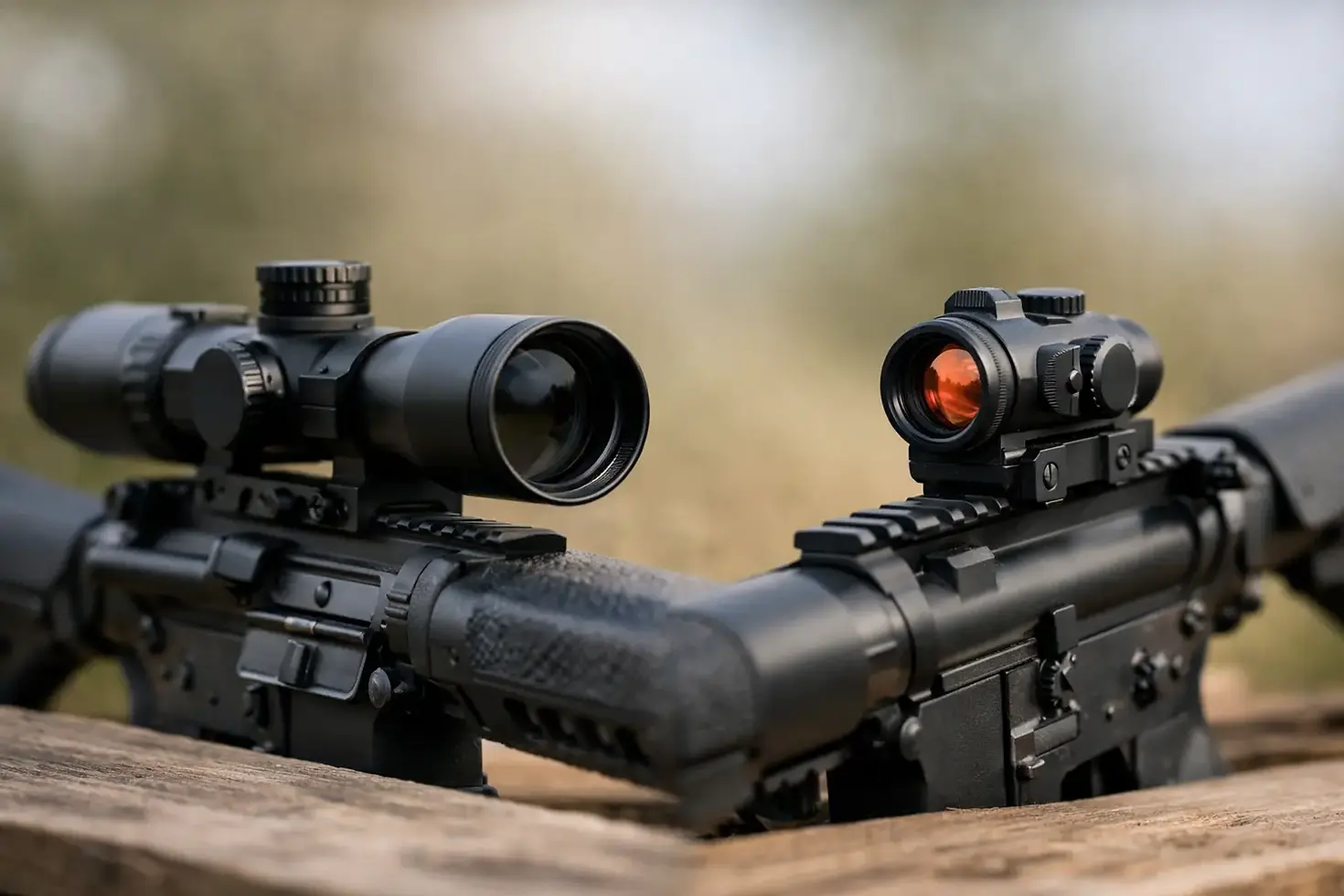
The simplest way to frame rifle scope vs red dot is this: red dots are built for rapid target acquisition, while rifle scopes are built to extend capability. One prioritizes speed. The other prioritizes precision and information.
A red dot projects an illuminated aiming point on a lens with no magnification on most models. You keep both eyes open, drive the rifle to the target, and break the shot with minimal visual clutter. That makes red dots extremely effective inside 100 yards, especially on multiple targets or moving targets.
A rifle scope adds magnification and usually a more detailed reticle. That extra visual data matters when targets are small, partially obscured, or simply farther away. It also matters when you need better shot placement, not just faster hits. Whether you are working a variable power LPVO or a higher magnification precision optic, a scope gives you more detail at distance and more confidence when conditions get less forgiving.
Where a red dot takes the lead
A quality red dot is hard to beat in close quarters and fast shooting. On a defensive rifle, truck gun, or training carbine, the advantage is obvious the moment the rifle comes up. There is no need to align eye relief, settle behind a magnified optic, or lose time hunting for a full sight picture. Put the dot where it needs to go and send it.
That speed matters most from point-blank distance out to roughly 100 yards. Inside that envelope, a red dot supports a more aggressive shooting style. It is ideal for home defense setups, classes, practical rifle work, and any scenario where transitions matter more than tiny groups.
Red dots also tend to be lighter and less bulky than many scope setups. That keeps the rifle more balanced and easier to run through long training days. Less weight on the rail can mean less fatigue and faster handling, especially on compact AR platforms.
There is another operational advantage that often gets overlooked: simplicity under stress. A red dot has fewer variables in the moment. No magnification ring to adjust. No temptation to overanalyze the reticle. For shooters who want a clean, direct aiming solution, that matters.
Where a rifle scope takes control
A rifle scope earns its place the moment distance, precision, or target identification become serious factors. If your rifle may be asked to work past 100 yards with consistency, magnification stops being a luxury and starts becoming capability.
With a scope, you can see more. That sounds basic, but it changes everything. You can better identify what you are shooting at, read target details, hold with more precision, and make more deliberate hits. If your use case includes hunting, longer-range range work, overwatch-style observation, or field shooting across open ground, a scope gives you a major advantage.
Low power variable optics sit in an especially useful middle ground. An LPVO can run close to 1x for short-range work, then scale up when the target pushes out. That flexibility is why so many shooters mount them on general-purpose rifles. A good LPVO does not replace a pure red dot for raw speed, but it closes the gap while giving you much more reach.
Traditional magnified scopes go even further. If your focus is precision, not speed, they are the better call. Small targets at 200, 300, or 500 yards demand more than a floating dot. They demand a sighting system that lets you see the target clearly and hold with intent.
The real trade-offs in rifle scope vs red dot
This is where the sales-floor answer of get both stops being useful. Most shooters are equipping one rifle for a primary role, and trade-offs matter.
A red dot is faster, but it gives up detail at distance. You can absolutely make hits beyond 100 yards with a red dot, especially with a solid zero and good fundamentals. But those hits become less efficient as targets shrink or visibility drops. A 2 MOA dot can cover a lot of target area once range opens up.
A rifle scope improves precision, but it adds complexity. Eye box, eye relief, magnification settings, and overall weight all become part of the equation. If you are clearing rooms, running barricades, or training hard at close range, that extra complexity can slow you down.
Battery dependence is another point people bring up with red dots. Modern units have long runtime, and many are extremely reliable, but electronics are still electronics. A scope with an etched reticle can remain usable even if illumination fails. For preparedness-minded buyers, that redundancy carries weight.
Then there is durability. Both categories can be rugged, but only if you are buying gear built for hard use. Cheap optics fail where mission-ready optics hold. That is true whether you choose a red dot or a scope. The category does not guarantee performance - build quality does.
How to choose based on your rifle's mission
If your rifle is a home defense or close-range defensive platform, start with a red dot. It is the faster, cleaner solution for confined spaces and rapid engagement. Add backup irons if you want another layer of confidence, but keep the setup lean.
If your rifle is a do-all AR meant for range work, preparedness, and varied distances, an LPVO deserves a hard look. It gives you enough speed up close and enough magnification to stay effective when the environment opens up. For many shooters, that is the most balanced answer.
If your rifle exists for longer-range precision or hunting, a scope is the obvious move. You need target detail, deliberate hold points, and magnification that supports ethical, accurate shots.
If you train mostly inside 50 yards and value fast target transitions over all else, a red dot remains king. If you regularly stretch your rifle past 200 yards, a magnified optic starts making more operational sense.
Your eyesight matters too. Some shooters with astigmatism see red dots as smeared or distorted, which can make precise aiming harder. In those cases, a scope with an etched reticle may provide a cleaner sight picture. That is not theory. It is a real performance issue, and it should influence the decision.
Budget matters, but cheap mistakes cost more
A low-end red dot can look like a smart buy until it loses zero, washes out in bright light, or quits under recoil. A low-end scope can punish you with poor glass, inconsistent tracking, and weak internals. If the rifle has a serious role, the optic should not be the weak point in the loadout.
That does not mean every buyer needs top-tier glass for every build. It means your optic should match the rifle's job and your expected level of abuse. A range toy can tolerate more compromise than a defensive setup. A field rifle carried in rough weather needs more than marketing claims.
That is why disciplined buyers look for durability, reticle usability, mount quality, battery life where relevant, and proven performance - not just magnification numbers or price tags. Retribution Tactical speaks directly to that market for a reason. Serious equipment is cheaper than failure.
The best answer is the one you will actually deploy well
There is no value in mounting a scope that gives you distance if you never train with magnification changes. There is no value in a red dot's speed if your realistic use case includes identifying and engaging targets beyond your comfort zone. Skill, context, and rifle role all matter more than internet opinions.
A red dot favors aggression, speed, and simplicity. A rifle scope favors control, detail, and precision. Neither is automatically better. The right choice is the one that supports your mission without forcing the rifle into a role it was never built to handle.
Before you buy, be honest about where you shoot, how far you shoot, and what your rifle is expected to do when it counts. Build around that reality, not fantasy loadouts. The best optic is the one that keeps your rifle ready when the range goes hot or the situation turns real.


Comments