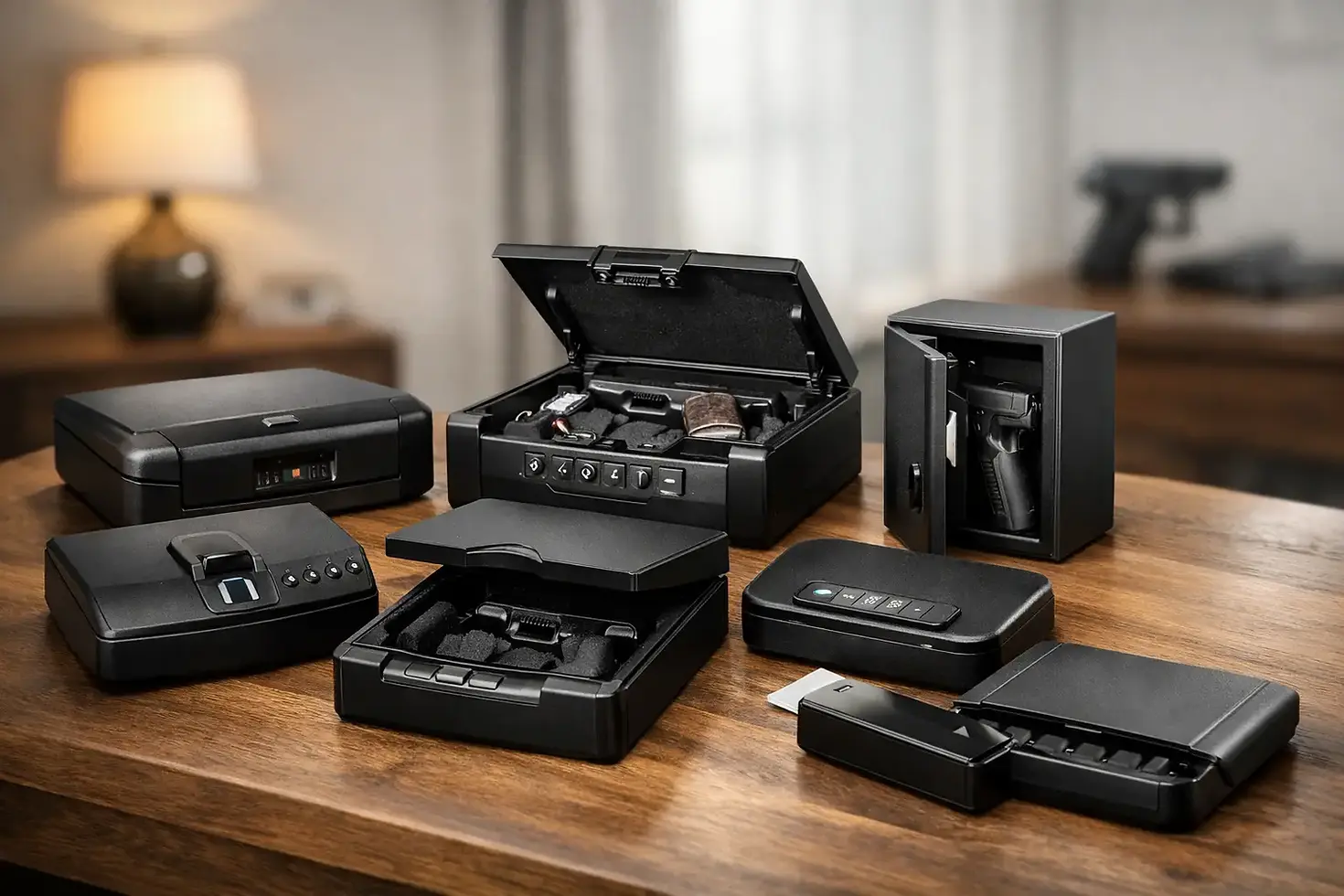
7 Best Quick Access Safes That Earn Trust
A defensive firearm does you no good buried under clutter, and it does real damage if the wrong hands reach it first. That is why the best quick access safes matter. They sit at the intersection of speed, control, and security, where a few seconds can count and a bad lock can ruin the whole mission.
Quick access safes are not trying to replace a full-size gun vault. They are built for a different role. This is the safe you stage beside the bed, under a desk, in a closet, or inside a vehicle when lawful storage is part of the plan. The job is simple - deny unauthorized access while letting you get to your firearm fast, under pressure, in low light, and with one hand if needed.
What separates the best quick access safes
A lot of products in this category look squared away on a product page. Fewer hold up when you start thinking through real use. The best quick access safes are not just fast on a demo table. They need to stay reliable after repeated openings, dead batteries, rough handling, and the kind of stress that kills fine motor skill.
Lock type is the first major decision. Biometric safes get attention because fingerprint access sounds fast and high-speed. Sometimes it is. A good biometric unit can be efficient once enrolled properly and kept clean. The trade-off is consistency. Wet fingers, dirty sensors, rushed placement, and lower-grade scanners can create hesitation at the exact moment you want certainty.
A mechanical push-button lock is less glamorous, but many serious users trust it more. You can run it in darkness by feel. There is no sensor to read a fingerprint incorrectly, and there is no software layer between you and the gun. Electronic keypad safes split the difference. They can be fast and flexible, but they still rely on battery power and electronics, so the backup entry method matters.
Then there is construction. A thin steel box with a fancy reader is still a thin steel box. Pry resistance, lid fitment, hinge protection, mounting points, and internal foam layout all matter. Quick access safes are usually smaller than traditional gun safes, which means thieves may try to remove the entire unit. If it can be carried off easily, its security value drops fast. A serious safe needs to be bolted down or cable secured where appropriate.
Best quick access safes by use case
The right pick depends on where and how you plan to deploy it. There is no universal winner because bedside access is different from truck storage, and both are different from discreet office staging.
Bedside quick access safes
For bedroom use, speed in the dark is the priority. This is where mechanical simplex-style locks and well-designed illuminated keypads shine. You want a lid or door that opens cleanly without snagging, enough interior space for your handgun and possibly a spare mag, and controls you can run half awake.
A bedside safe should also mount solidly to furniture or flooring. Sliding around in a drawer or floating loose in a nightstand is not a plan. If your setup includes a weapon light, optic, or threaded barrel, confirm the internal dimensions. Plenty of safes claim handgun compatibility but get tight once you add real-world accessories.
Vehicle quick access safes
Vehicle safes are compromise tools. They are useful, but they are not invincible. A truck console vault or cabled lockbox can help with lawful temporary storage when entering restricted locations, but smash-and-grab theft remains a real threat if the unit is poorly concealed or weakly secured.
For vehicle use, low profile design matters as much as lock speed. You do not need the lid to spring open like a Hollywood prop if that means exposing the safe or sacrificing steel thickness. Focus on fit, anchor method, and whether the lock remains usable in awkward seating positions. In a vehicle, simple often wins.
Closet, office, and discrete home staging
If the safe is staged away from the main bedroom, capacity and concealment start to matter more. You may want room for a compact rifle-caliber pistol, a full-size handgun with optic, or two handguns in a shared household setup. This is where larger quick access safes with gas struts, heavier steel bodies, and better interior organization earn their keep.
This category also benefits from quiet operation. A loud electronic beep or clanging lid defeats the point of discreet access. Some of the better units let you mute tones and tune the opening behavior, which is a small detail until you actually need it.
Lock types and the real trade-offs
Marketing loves absolutes. Real gear selection does not work that way.
Biometric safes can be a strong option for users who want fast access and are willing to test the scanner repeatedly before trusting it. Higher-end units tend to perform better, especially when they allow multiple enrolled scans of the same finger and include keypad or key backup. If you go biometric, verify it under less-than-perfect conditions, not just sitting calm at your kitchen table.
Mechanical button safes are the workhorses of this category. They are usually favored by buyers who prioritize consistency over flash. The downside is that some mechanical layouts are bulkier, and quality varies. A cheap mechanical lock can feel mushy or imprecise. A good one feels deliberate and repeatable.
Electronic keypad safes remain popular because they offer straightforward use, backlit controls, and usually a slimmer profile than heavy-duty mechanical lock bodies. Their weak point is power dependency. That does not mean avoid them. It means vet the battery life, low-battery warning, external power option, and override key design before you trust one for defensive storage.
Features worth paying for
The details that matter most are rarely the flashy ones. Interior fit is a big one. If the safe does not accommodate your pistol with its optic and light, then it is not a defensive storage tool for your loadout. It is a box for a different gun.
A quality hinge system is another major point. Some quick access safes look strong from the front but expose weak hinge geometry or flex at the corners. Lid speed should be controlled, not violent. You want repeatable opening with enough clearance to draw cleanly.
Mounting hardware matters more than most buyers admit. The best safe in the category becomes a liability if it is left unsecured. Look for reinforced mounting holes, solid included hardware, and a footprint that works with your intended location.
Tamper alerts, interior lights, silent mode, and backup entry are all useful, but they are secondary to lock reliability and structure. If the core system is weak, extra features are just decoration.
What most buyers get wrong
The biggest mistake is buying for the spec sheet instead of the mission. A safe with three access methods and a polished finish means nothing if it fails to fit your pistol, cannot be mounted properly, or takes too much hand precision to open under stress.
Another common error is ignoring practice. Quick access is not automatic just because the box says so. You need reps. Open it in the dark. Open it from bed. Open it with your support hand. Test battery replacement intervals. If it is biometric, test after range sessions, after yard work, and when your hands are less than perfect.
Buyers also underestimate environmental placement. Humidity, dust, temperature swings, and vibration can all affect long-term performance. A safe staged in a climate-controlled bedroom has a different operating reality than one riding in a truck through summer heat and winter cold.
How to choose the best quick access safes for your setup
Start with the firearm, not the safe. Measure your actual handgun with the optic, light, mag baseplate, and any other installed gear. Then define the environment - bedside, vehicle, office, closet, or mixed use. From there, choose the lock system you trust most, not the one with the loudest marketing push.
If your priority is maximum consistency, a well-built mechanical push-button safe deserves a hard look. If you want modern convenience and fast access, a higher-quality biometric model with a proven backup system can work. If you value slim form factor and straightforward programming, an electronic keypad may be the right middle ground.
The final filter is build quality. Steel thickness, pry resistance, mounting options, and repeatable opening mechanics separate duty-minded storage from consumer-grade filler. That is where serious buyers usually end up spending a little more, and for good reason. When the safe is part of your home defense plan, cutting corners is not a smart economy.
For shooters building a mission-ready setup, quick access storage should be treated like any other critical gear category. Vet it, mount it, train with it, and make sure it matches the role. Retribution Tactical customers already understand the standard - equipment either performs when called on, or it gets replaced. Your safe should meet that same standard before you trust it with a loaded firearm.


Comments