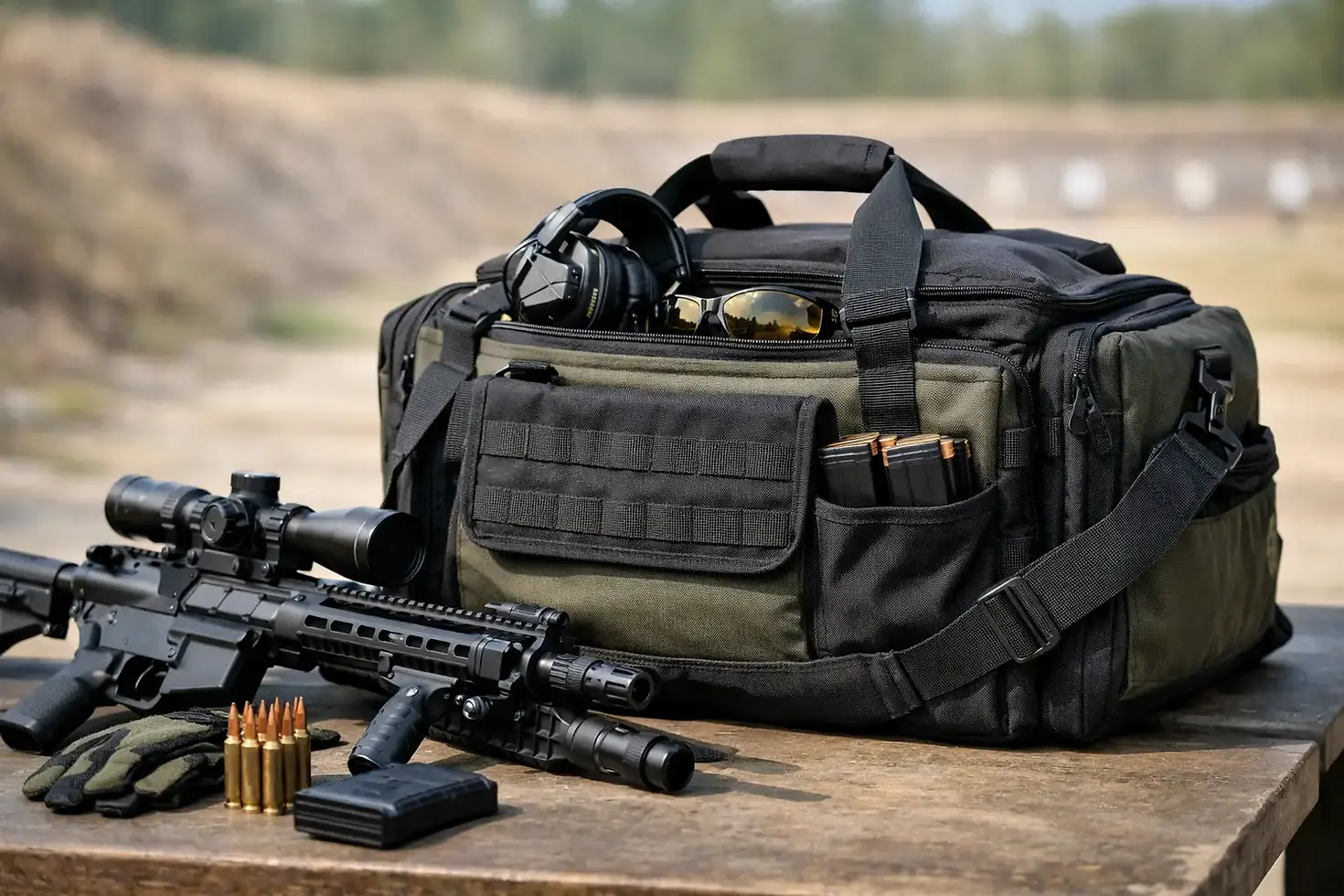
Best Range Bag for Rifle Gear
- retributioninfo
- Apr 17
- 6 min read
A bad range bag shows its weaknesses fast. You feel it when loose mags sink to the bottom, when your stapler is tangled with ear pro, and when a box of match ammo gets crushed under a cleaning kit. If you are looking for the best range bag for rifle gear, the real goal is not just storage. It is load discipline, protection, and fast access when the firing line is active.
Rifle shooters ask more from a bag than pistol-only users usually do. The load is heavier, the support gear is bulkier, and the margin for sloppy organization is smaller. AR-15 magazines, tools, optics accessories, spare batteries, lube, medical gear, chronograph parts, data books, and hearing protection all compete for space. A mission-ready bag keeps that loadout controlled without turning into a duffel full of dead weight.
What makes the best range bag for rifle gear?
Start with structure. A rifle bag should hold shape even when partially loaded, because a collapsing bag turns every pocket into a gear trap. Reinforced walls, a stable base, and compartments that stay open while you work matter more than flashy exterior styling. If you have to fight the bag just to grab a chamber flag or torque wrench, it is already failing the mission.
Capacity matters too, but bigger is not automatically better. A giant bag sounds useful until it is packed with ammo and weighs as much as a ruck. Most shooters are better served by a medium-to-large range bag with dedicated internal organization rather than one cavernous compartment. You want enough room for a rifle support loadout, not enough room to carry your whole garage.
Material choice separates recreational luggage from field-capable kit. Heavy-duty nylon, reinforced stitching, abrasion-resistant panels, and quality zippers are non-negotiable if the bag will ride in truck beds, sit on gravel, or get dragged through outdoor bays. Weak handles and bargain zippers are usually the first points of failure. Once those go, the rest of the bag is on borrowed time.
Rifle gear demands a different layout
The best range bag for rifle gear is built around rifle support items, not generic travel storage. That distinction matters. Rifle shooters carry more rectangular, rigid, and weight-dense gear than someone bringing one pistol, two mags, and a box of ammo.
Magazine storage is a prime example. Rifle magazines are awkward if they are tossed loose, and they add up fast in both bulk and weight. Internal dividers or mag-specific pockets help keep them upright, countable, and easy to grab. That is especially useful if you run multiple loads or separate training mags from duty-grade mags.
Ammo is another issue. A serious rifle session can mean several hundred rounds, and ammo gets heavy fast. Good bags distribute that weight low and evenly so the whole platform stays stable when carried. If the base sags or the handles torque inward, the bag was not designed for actual range volume.
Then there is optics support. Many rifle shooters carry lens cloths, turret tools, spare batteries, torque drivers, and small adjustment gear. Those items need secure placement, not a random dump pocket where they get buried under brass catchers and gloves. The same goes for suppressor wraps, shot timers, bore guides, and small parts kits. Organization is not cosmetic. It keeps the line moving.
Internal organization beats extra bulk
More pockets do not always mean better performance. Too many shallow or poorly sized compartments waste space and create clutter. What works best is a simple command structure inside the bag: one main compartment for heavy items, side sections for mags and tools, and quick-access pockets for the small gear you reach for every session.
Modular dividers help if your setup changes often. If you switch between AR platforms, precision rifles, and range roles, an adaptable interior gives you more control than fixed compartments. On the other hand, if your loadout is consistent every week, built-in organization can be faster and cleaner. It depends on how standardized your gear is.
The features that actually matter on the range
Carry comfort gets overlooked until the bag is loaded. Padded handles, a reinforced shoulder strap, and balanced weight distribution make a major difference on long walks from the parking lot to the bench or bay. If your bag cuts into your shoulder before you even start shooting, it is not operationally sound.
A hard or reinforced bottom is one of the most useful features you can get. Range bags get dropped on concrete, dirt, wet grass, and gravel. A strong base protects contents, keeps the bag from tipping, and adds durability where wear happens first. It also helps when the bag is loaded with ammo and tools instead of lightweight accessories.
Zipper quality deserves more attention than it usually gets. Large pulls, smooth travel, and heavy-duty tracks matter when your hands are cold, gloved, or dirty. Small hardware is a liability. The same goes for weak stitching around carry points. A range bag lives or dies at the stress points, not in the product photos.
Weather resistance is another practical upgrade. Most shooters do not need a fully waterproof bag, but they do need fabric and construction that can handle damp ground, light rain, and airborne dust. Even if your rifle stays cased separately, your support gear still needs protection. Wet notebooks, corroded batteries, and filthy lens tools are avoidable problems.
Size selection: go mission-ready, not oversized
Choosing size is where many buyers overshoot. If you only run one rifle, six to ten mags, ear and eye pro, a compact cleaning kit, tools, and ammo for a single session, you probably do not need the largest bag on the market. A bag that is too big invites clutter and wasted movement.
If you train with multiple uppers, carry support equipment for a partner, or bring advanced gear like spotting optics, tripods, timers, and med supplies, then stepping up in size makes sense. The key is carrying what serves the mission. Dead space usually turns into junk storage.
This is also where a two-bag setup can outperform one oversized bag. Many shooters are better off with a dedicated rifle case plus a focused range bag for support gear. That keeps the rifle protected separately and allows the bag to do its real job: managing mags, ammo, tools, maintenance items, and personal essentials. A bag should support the weapon system, not replace every other piece of transport gear.
Hard use means thinking beyond the first range trip
A bag can look squared away on day one and still fail after a season of actual use. The test is repetition. Repeated loading, rough vehicle transport, outdoor dust, and weight stress expose weak stitching, poor materials, and bad pocket design quickly.
That is why serious buyers should look for bags built with long-term abuse in mind. Reinforced seams, bar-tacked handles, thick fabric, and dependable hardware are not luxury features. They are what keep your support gear deployable month after month. Premium gear costs more up front, but replacing cheap bags every season is not a smart logistics plan.
For tactical shooters, a little external utility can help, but restraint matters. MOLLE panels, admin pockets, and hook-and-loop fields are useful if you actually use them. If they just add bulk and snag points, they are decoration. The best bag is not the one with the most extras. It is the one that keeps your loadout secure, organized, and ready.
How to judge a bag before you buy
Think through your standard range package. Count your mags. Estimate your ammo load. Include eye and ear pro, batteries, multitool, chamber flags, cleaning gear, targets, gloves, and medical basics. If you run optics seriously, add your support kit too. That inventory tells you far more than a generic capacity claim.
Next, look at how the bag handles weight-bearing items. Are the main handles stitched into the body with reinforcement, or just sewn into the top panels? Does the base look capable of carrying dense loads? Are the zippers oversized enough for repeated hard use? Product descriptions often talk about storage, but serious shooters should evaluate load-bearing design first.
Finally, match the bag to your actual training environment. Indoor bench shooters may prioritize compact organization and clean access. Outdoor rifle shooters may need weather resistance, tougher construction, and room for more sustainment gear. Competitive shooters often need fast compartment access. Preparedness-minded users may want a bag that can pull double duty for field use. There is no universal perfect answer. There is only the right bag for your operating profile.
A premium rifle setup deserves more than a bargain-bin carryall. The right bag brings order to the load, protects mission-critical support gear, and cuts wasted movement at the line. If your rifle gear matters, your bag should be built like it does too - disciplined, durable, and ready for work.


Comments