Soft Case vs Hard Case: Which Protects Your Rifle?
- retributioninfo
- Jul 31
- 6 min read
A rifle case is not an afterthought. It is the layer between a zeroed optic, a clean trigger, and the abuse of truck beds, range gravel, airport counters, and crowded safes. The soft case vs hard case decision comes down to one question: what is your gear likely to encounter between the safe and the firing line?
A soft case wins when speed, low weight, and practical carry matter most. A hard case takes the lead when impact protection, controlled transport, and secure long-term staging are part of the mission. Neither is automatically the better choice. The wrong case is the one that does not match your rifle, route, or operational requirements.
Soft Case vs Hard Case: Start With the Mission
Think beyond the firearm itself. A lightweight AR-15 with a compact red dot, two spare magazines, and a quick trip to a local range has different demands than a precision rifle with exposed turrets, a suppressor, and a multi-state hunt or flight itinerary.
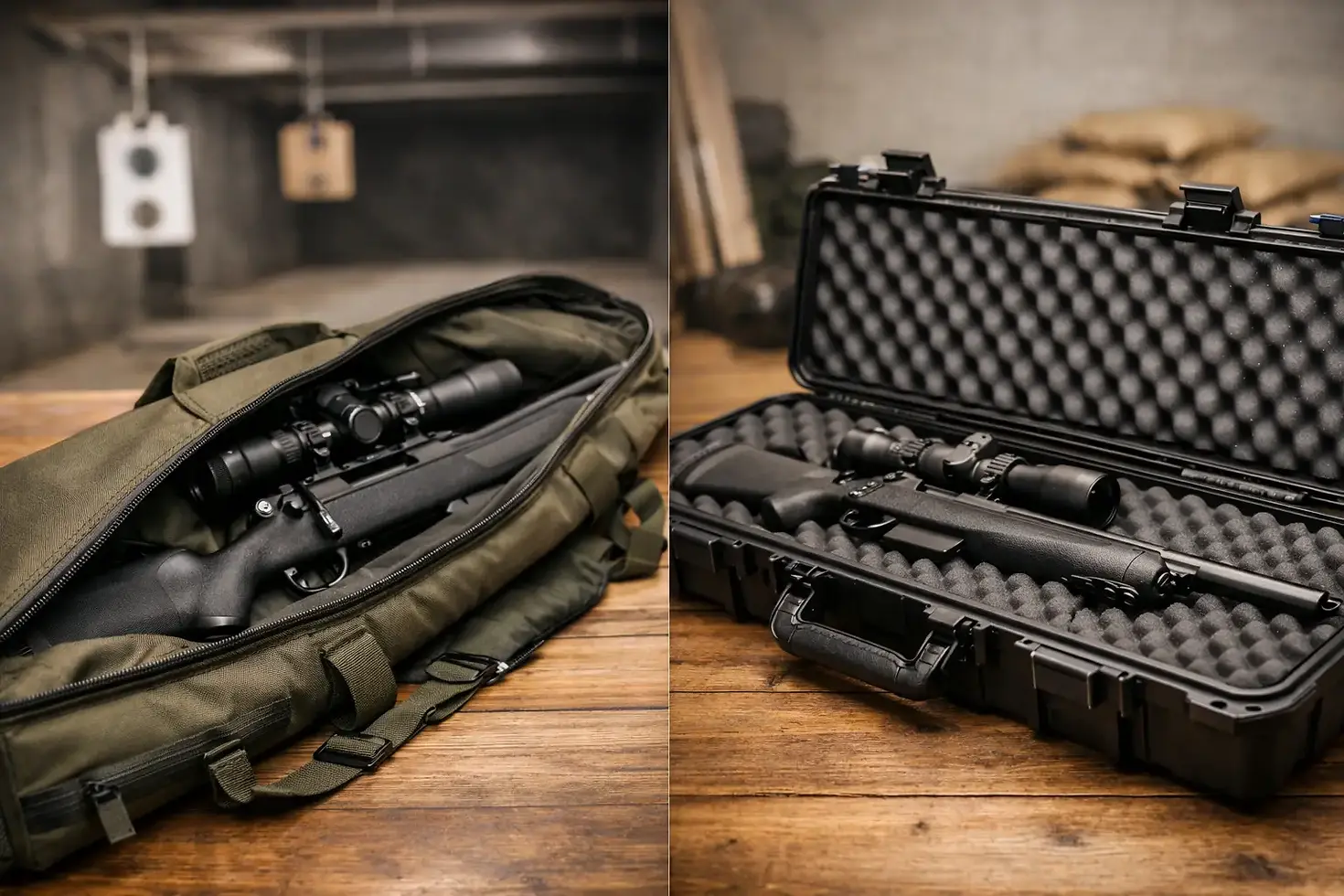
Soft cases are built for movement. They are easier to carry, faster to load, and less awkward in a vehicle. Many include external magazine pouches, MOLLE panels, shoulder straps, padded divider sections, and room for ear protection or a cleaning kit. For range days and local transport, that integrated organization is hard to beat.
Hard cases are built to absorb punishment. Their rigid shells resist crushing, hard impacts, moisture intrusion, and pressure from stacked equipment. They are the right call when the rifle may ride with heavy cargo, move through baggage handling, remain in a vehicle during rough travel, or need protection from more than a minor bump.
The case should serve the loadout, not force the loadout to compromise.
When a Soft Case Is the Right Tool
A quality soft rifle case is more capable than its lightweight profile suggests. The key word is quality. Thin, unpadded fabric offers little more than scratch protection. A mission-ready soft case uses dense closed-cell padding, reinforced stitching, durable zippers, protected muzzle and stock areas, and straps that keep the rifle from shifting inside.
For routine range transport, soft cases are often the practical winner. They carry comfortably across a parking lot, fit easily behind a truck seat, and can hold the support gear that usually ends up loose in the cab otherwise. A two-rifle case can also separate firearms with padded internal walls, making it useful for shooters bringing a carbine and a secondary rifle to the same session.
Soft cases also make better use of space. A rigid hard case has a fixed footprint whether it holds a rifle or sits empty. A soft case can be hung, folded, or tucked into a vehicle without becoming a bulky obstacle. For shooters working from a packed safe room, hunting truck, or range bag setup, that flexibility matters.
Soft Case Advantages
The appeal is straightforward: less weight, faster handling, and more carry options. A well-designed soft case can keep magazines, slings, gloves, batteries, and basic maintenance gear alongside the rifle without requiring a separate bag.
That convenience has limits. Soft cases protect against routine contact, light drops, dust, and surface wear. They do not reliably protect a rifle from a heavy cooler sliding across a truck bed, a hard fall onto a scope turret, or another case stacked on top during travel. Padding reduces shock. It does not create a rigid barrier.
Use a soft case when you control the transport environment. Local range trips, trips to private land, moving gear from the house to the vehicle, and carrying a rifle through an organized training day are all strong fits.
When a Hard Case Earns Its Weight
Hard cases are for gear that cannot afford to take a hit. They are especially valuable for rifles wearing premium optics, night vision accessories, laser systems, bipods, and precision equipment that can lose zero or suffer damage from a single hard impact.
A rigid shell distributes force that would otherwise land directly on the rifle. Foam inserts hold the firearm in position, prevent optic-to-stock contact, and keep accessories from bouncing into one another. The best setups are not simply packed tight. They are fitted so the rifle is immobilized without pressure on delicate controls, turrets, or mounted electronics.
Hard cases also provide a stronger platform for controlled transport. Many feature lockable hasps, gasket seals, pressure-equalization valves, reinforced hinges, and wheels for moving a heavy loadout. They are not a replacement for a safe or a dedicated locking storage solution, but they add meaningful protection when gear must be moved or staged.
Hard Case Advantages
Hard cases are the clear choice for airline travel and any situation where others will handle your equipment. Federal, state, and carrier requirements can vary, so confirm the current rules for every leg of travel before departure. As a general principle, firearms should be unloaded, inaccessible during transport, and secured in a compliant locked hard-sided container when flying.
They also make sense for long-term vehicle storage during an event, remote hunting trips, or field operations where rain, dust, rough roads, and stacked cargo are expected. If the rifle is mission-critical and a damaged optic would end the day, the hard case is cheap insurance.
The trade-off is bulk. A hard case takes up space, adds weight, and can be cumbersome through tight hallways, crowded firing lines, or smaller vehicles. Foam can also retain moisture if wet gear is sealed inside. Dry the rifle and case interior before long-term storage, and inspect foam regularly for deterioration or trapped debris.
Protection Is More Than Shell Material
The word “protection” gets thrown around loosely. For a rifle case, it has four separate meanings: impact resistance, weather resistance, movement control, and unauthorized-access deterrence.
A hard case usually dominates impact and weather protection, especially with a sealed design. A soft case can be excellent at movement control if it has proper straps and thick padding, but it will never match a rigid shell against crushing force. On the other hand, a soft case may be more discreet and easier to keep close at hand, which can reduce the time a firearm spends unattended in the first place.
Security requires clear thinking. Locks on a case discourage casual access and can meet transport requirements in certain circumstances, but a case is not secure storage. Use a proper safe, cabinet, or purpose-built locking storage system for home storage. Never assume a zipper lock or locked hard case offers the same protection as a rated secure-storage solution.
Fit Your Case to the Actual Rifle
Do not buy by exterior length alone. Measure the rifle in its transport configuration, including the stock position, muzzle device, optic, mounted light, bipod, and any suppressor or accessory that remains installed. A case that is barely long enough often forces the rifle against the ends, leaving the muzzle or buttstock exposed to repeated impact.
For a hard case, leave enough internal clearance to create protective foam around the entire rifle. For a soft case, look for padding that extends beyond the firearm at both ends and internal retention straps that prevent it from sliding. A rifle should not arrive at the range with a loose sling wrapped around the optic or a magazine pouch pressing against the charging handle.
Also consider deployment. A precision bolt gun may need a long hard case with cut foam and space for a bipod. A defensive carbine may benefit from a compact soft case that opens flat and keeps magazines organized. The most capable setup is the one you can load, carry, and deploy without fighting your own equipment.
Build a Two-Case System
Serious shooters often stop treating this as an either-or decision. A soft case handles weekly range movement and local transport. A hard case is reserved for air travel, extended trips, high-value optics, and environments where the rifle may take a hard hit.
That two-case approach protects your investment without forcing every range trip into a heavy, oversized container. It also lets you stage each case for its purpose: the soft case with immediate range essentials, the hard case with fitted foam, locks, and travel-ready documentation.
Retribution Tactical customers build loadouts around capability, not appearances. Apply the same standard to the case. Buy the protection level your mission actually demands, keep your rifle secured according to applicable laws, and make every trip to the range or field one less opportunity for preventable gear damage.


Comments